
Written by Jeanetta Shepherd, Owner of Elk Hollow Resort | Bryson City, NC | Updated August 2026
This guide is based on my experience as the owner of Elk Hollow Resort in Bryson City. Over the years, we’ve helped guests prepare for every kind of Smoky Mountains adventure, from weekend escapes and hiking trips to family vacations in every season. The recommendations in this packing list combine our firsthand local experience with careful research, helping you pack confidently for a comfortable and enjoyable trip.
Disclosure: Elk Hollow Resort is our own property, so it’s featured because it’s the place we know best. We also encourage you to explore the other resources referenced throughout this guide to make the most of your Smoky Mountains visit. Information reflects the latest recommendations available as of August 2026 but may change as weather conditions, park guidelines, and seasonal activities evolve. We review and update this guide regularly to keep it accurate, practical, and up to date.
We’ve checked in enough guests at Elk Hollow Resort to know the pattern before it happens. Someone steps out of their car in shorts and flip-flops, glances at the ridgeline, and says “it’s colder up here than the forecast said.”
A solid Smoky Mountains packing list isn’t about covering every possible scenario. It’s about understanding how this specific mountain range behaves, because it does not behave like the weather app on your phone predicts.
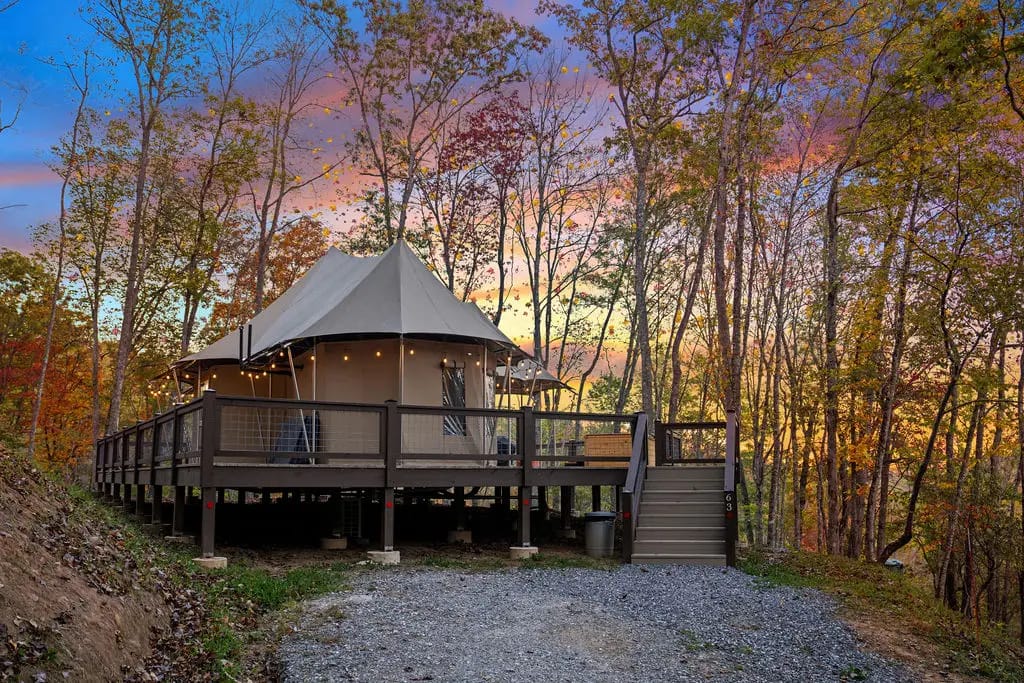
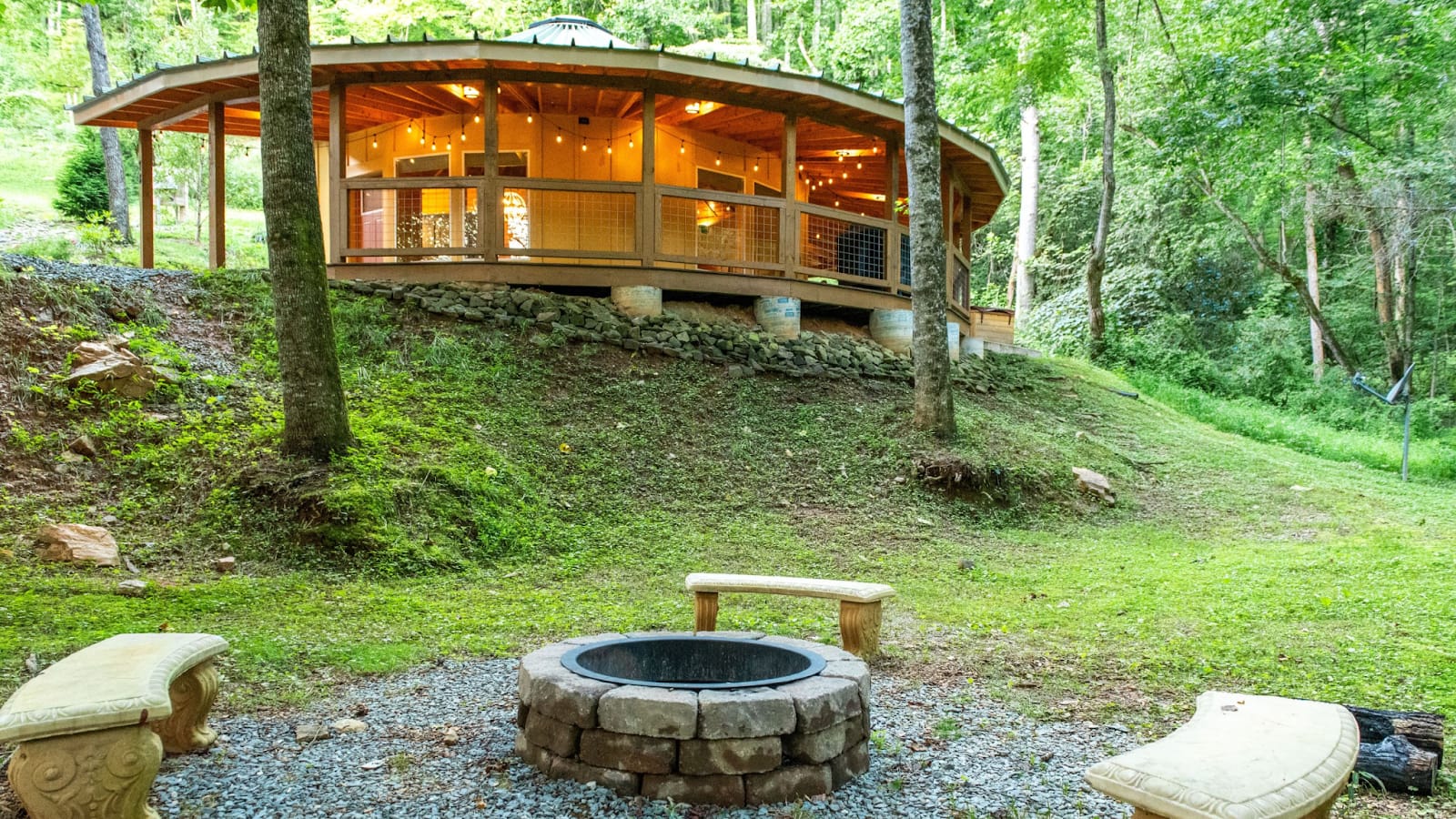
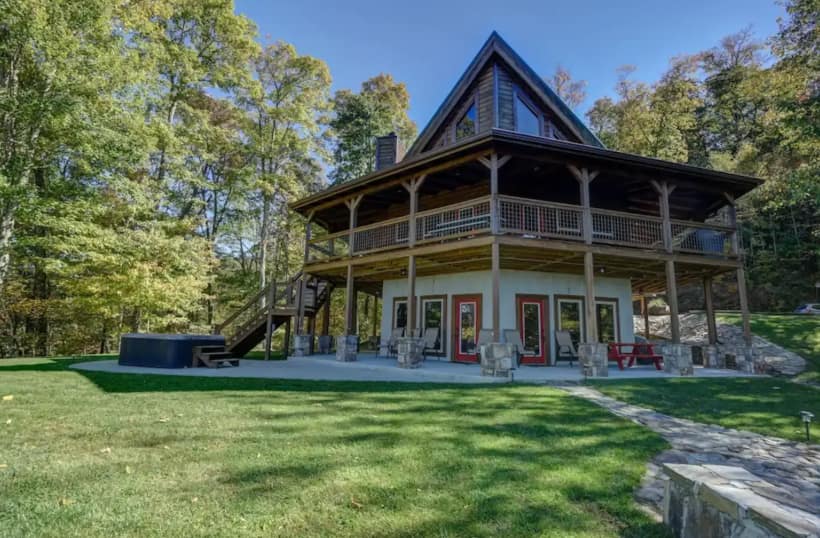
We manage fifteen safari tents, yurts, and a lodge tucked five minutes from Deep Creek, making our property a favorite for anyone searching for unique glamping in North Carolina, and we talk packing logistics with guests almost daily.
What follows is built from those conversations, not a generic checklist copied from a national parks brochure.
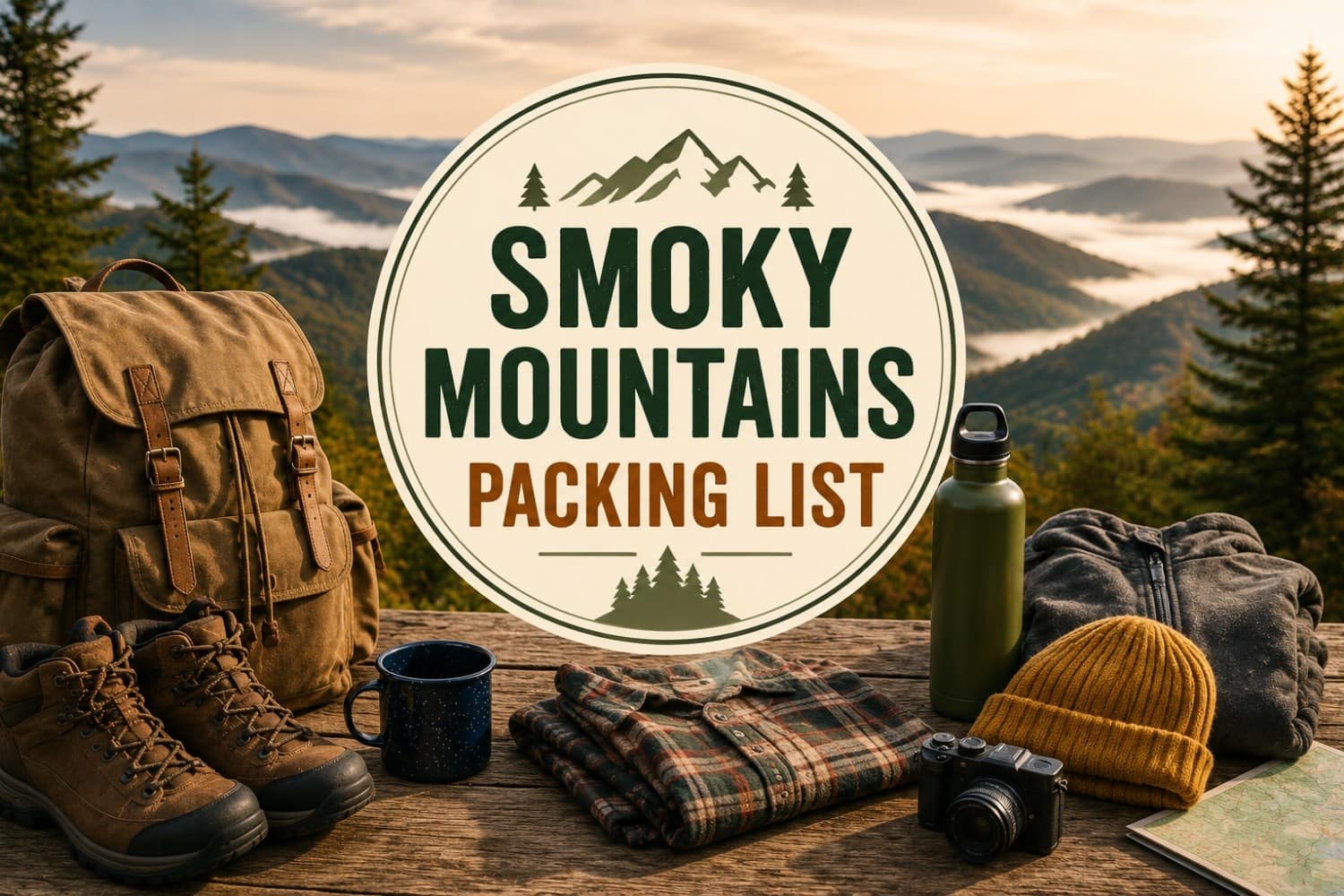
Quick Smoky Mountains Vacation Packing List (The 60-Second Version)

If you’re short on time, this is the non-negotiable grab bag. We keep a version of this list taped inside our own site vehicles.
- Photo ID and any national park documents
- Layered jacket (fleece plus a waterproof shell)
- Broken-in walking or hiking shoes
- Reusable water bottle
- Phone charger and a car charger
- Sunscreen SPF 30 or higher, even on cloudy days
- Cash for small vendors and cash-only parking areas
That’s it. Everything else in this Smoky Mountains packing list builds on those seven items.
The Question We Get Asked Most About the Great Smoky Mountains Packing List
“What do I actually need to pack for the Smoky Mountains?” is the single most common question in our pre-arrival messages, more than anything about hot tubs or hiking trails.
Our answer is always the same: pack for three seasons in one bag, because the Smokies genuinely deliver all three in a single day.
Elevation here changes temperature roughly 3 to 5°F for every 1,000 feet you climb, so a warm morning in downtown Bryson City (at about 1,736 feet) can feel 10 to 15 degrees cooler at Newfound Gap (5,046 feet) or Kuwohi (6,643 feet) by afternoon.
Guests who pack layers, closed-toe shoes, and one rain shell almost never message us with a weather complaint. Guests who pack a single outfit per day usually do.
What to Wear in the Smoky Mountains by Season
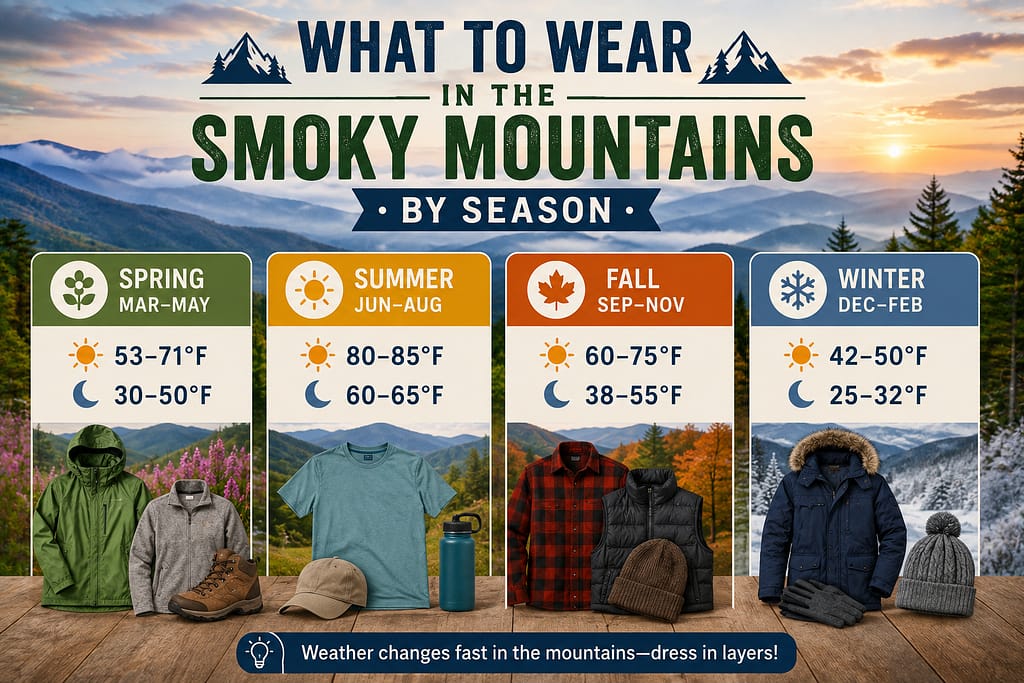
This is where most packing lists get vague. We’d rather give you real numbers. Average temperatures below come from National Weather Service climate data for the Bryson City area, and we treat them as a starting point, not a guarantee, since mountain weather shifts fast.
| Season | Avg. Daytime High | Avg. Nighttime Low | What Defines It |
| Spring (Mar–May) | 53–71°F | 30–50°F | Wildflowers, rain showers, big morning-to-afternoon swings |
| Summer (Jun–Aug) | 80–85°F | 60–65°F | Humidity, afternoon thunderstorms, cooler nights at elevation |
| Fall (Sep–Nov) | 60–75°F | 38–55°F | Foliage crowds, cold mornings, warm afternoons |
| Winter (Dec–Feb) | 42–50°F | 25–32°F | Occasional snow above 4,000 ft, road closures possible |
Spring Packing List Smoky Mountains
Spring is our favorite season to recommend for first-time visitors, mainly because the trails are at their best and the crowds haven’t hit summer levels yet.
- Waterproof rain jacket (spring showers arrive fast and often)
- One to two mid-layers for cool mornings
- Quick-dry hiking pants
- Light gloves for early starts on the trail
- Bug spray, since mosquitoes start appearing by late April
What to wear in the Smoky Mountains in spring usually comes down to layers you can shed by 11 a.m. and put back on by 6 p.m. Bring a sweater for porch evenings.
Our guests at Elk Hollow Resort tell us the creek breeze near the property gets noticeably cooler than downtown Bryson City after sunset.
Summer in the Smokies Packing List
Summer is our busiest season, and the humidity is real. This is also when we get the most questions about what to wear to the Smoky Mountains for river days.
- Breathable, moisture-wicking shirts
- Quick-dry shorts and a swimsuit for Deep Creek tubing
- Water shoes with grip (river rocks are slicker than they look)
- Sunglasses, a hat, and SPF 50 sunscreen
- A light layer for evenings, since temperatures at higher elevations can drop 15 to 20 degrees after dark
Local Tip: If your stay includes a fire pit, summer nights are prime marshmallow-roasting weather even when the daytime high hits 88°F.
Pack a light hoodie specifically for that window between dinner and bed.
Fall Packing List Smoky Mountains
Fall is the single most photographed season here, and it’s also the most unpredictable in terms of temperature swings.
- Flannel shirt or lightweight sweater
- A packable down vest or jacket
- Wool hiking socks
- Insulated boots for late-November hikes
- A thermos, because hot coffee on a cold overlook is a small luxury worth packing for
Peak foliage around Bryson City and the Great Smoky Mountains Railroad typically runs mid-October through early November, though exact timing shifts year to year with elevation and weather.
If you’re chasing color, call ahead or check the park’s foliage reports before locking in dates.
Winter Packing List Great Smoky Mountains
Winter is our quietest, and honestly one of the most underrated seasons for a mountain stay. Fewer crowds, lower nightly rates in many cases, and a genuine coziness to cabin life.
- Thermal base layers, top and bottom
- A heavier insulated jacket, not just a fleece
- Wool socks and insulated, waterproof boots
- Gloves and a hat rated for below-freezing temperatures
- Hand warmers for early sunrise viewpoints
Newfound Gap Road and other high-elevation routes close temporarily during snow or ice events.
Always check the park’s road status page or text “FollowSmokiesRoadsNPS” to 40404 before a winter drive to Kuwohi.
 A note from your host
Come stay with us at Elk Hollow
Hi, I'm Jeanetta. I built Elk Hollow as a private mountain escape minutes from Deep Creek and the Great Smoky Mountains. Luxury safari tents, hard-wall yurts, and a four-bedroom lodge, each with a private hot tub and fire pit. I'd love to host you.
Use code BLOG10 for 10% off your stay
See Our Stays
A note from your host
Come stay with us at Elk Hollow
Hi, I'm Jeanetta. I built Elk Hollow as a private mountain escape minutes from Deep Creek and the Great Smoky Mountains. Luxury safari tents, hard-wall yurts, and a four-bedroom lodge, each with a private hot tub and fire pit. I'd love to host you.
Use code BLOG10 for 10% off your stay
See Our Stays
Do I Need Hiking Boots for the Smoky Mountains?
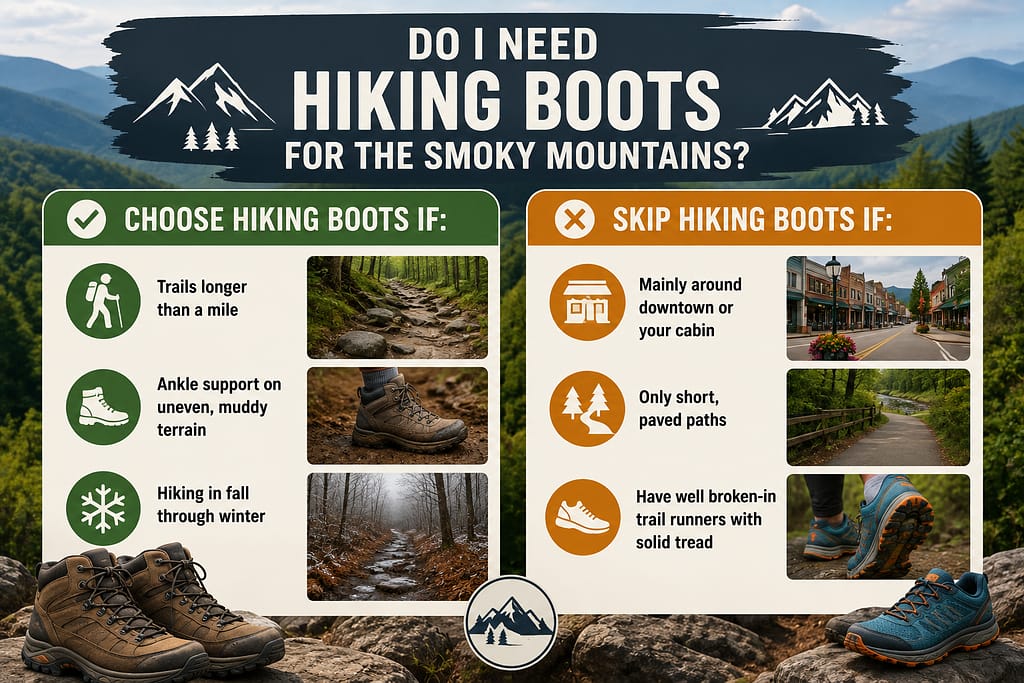
This comes up in almost every pre-arrival conversation we have, so here’s our honest answer.
Choose hiking boots if:
- You’re planning any trail longer than a mile, since roots, rocks, and creek crossings are constant on Smokies trails
- You want ankle support on uneven, often muddy terrain
- You’re hiking in fall through winter, when trails hold moisture longer
Skip hiking boots if:
- You’re mainly walking around downtown Bryson City, Cherokee, or your cabin deck
- Your trip is limited to short, paved paths like sections of Deep Creek near the trailhead
- You already have well broken-in trail runners with solid tread. New boots on day one is how blisters happen
If you do bring boots, break them in before you arrive. We see more blister complaints from brand-new boots than from any trail condition.
What to Wear Hiking in the Smoky Mountains
Once footwear is sorted, clothing for the trail itself matters just as much. If you’re still deciding on your basecamp, finding the best places to stay for hiking in the Smoky Mountains will keep you close to key trailheads like Deep Creek or Kuwohi.
| Item | Why It Matters | Our Note |
| Moisture-wicking base layer | Cotton stays wet and gets cold fast | Skip cotton tees on longer hikes |
| Waterproof shell | Afternoon storms are common June through August | Pack it even on sunny mornings |
| Broken-in hiking boots or trail shoes | Roots and rock scrambles are constant | Ankle support matters on Deep Creek and Indian Creek Falls trails |
| Moisture-wicking socks | Prevents blisters on humid days | Wool or synthetic, never cotton |
| Sun hat and sunglasses | Tree cover thins near ridgelines | Especially at Kuwohi and Andrews Bald |
Smoky Mountains Hiking Packing List (Day Trips)

For a standard day hike out of Bryson City, whether that’s Indian Creek Falls, Deep Creek Loop, or Charlie’s Bunion, this is what we tell guests to carry.
- Daypack, 20 to 30 liters
- Two liters of water per person, minimum, or a hydration bladder
- Trail snacks like nuts, jerky, or granola bars
- Offline map or downloaded AllTrails route, since cell signal is unreliable inside the park
- First-aid basics and blister pads
- Trekking poles for anything with real elevation gain
- Emergency whistle and a small multi-tool
What Visitors Often Don’t Realize: Cell service inside Great Smoky Mountains National Park is spotty at best and nonexistent at most trailheads.
GPS-based apps can lag or fail entirely. We tell every guest to download offline maps the night before, while they still have hotel or cabin WiFi.
Smoky Mountains Backpacking Checklist (Overnight Trips)
Fewer of our guests backpack, but enough do that it’s worth a dedicated section.
Overnight backcountry camping in the park requires a permit through the Backcountry Office, and campsites often need reservations weeks in advance during peak season.
- Backcountry permit (required, purchased through the park’s Backcountry Office)
- Tent rated for the season, plus a footprint
- Sleeping bag rated at least 10°F below expected overnight lows
- Bear-resistant food storage, either a canister or the site’s provided cable system
- Water filter or purification tablets, since not all backcountry water sources are reliable
- Lightweight stove and fuel
- Headlamp with spare batteries
Bears are active throughout the park, and food storage rules are enforced, not suggested. Ask a ranger or check current bear activity closures before you commit to a route.
Cabin Trip Packing List Smoky Mountains
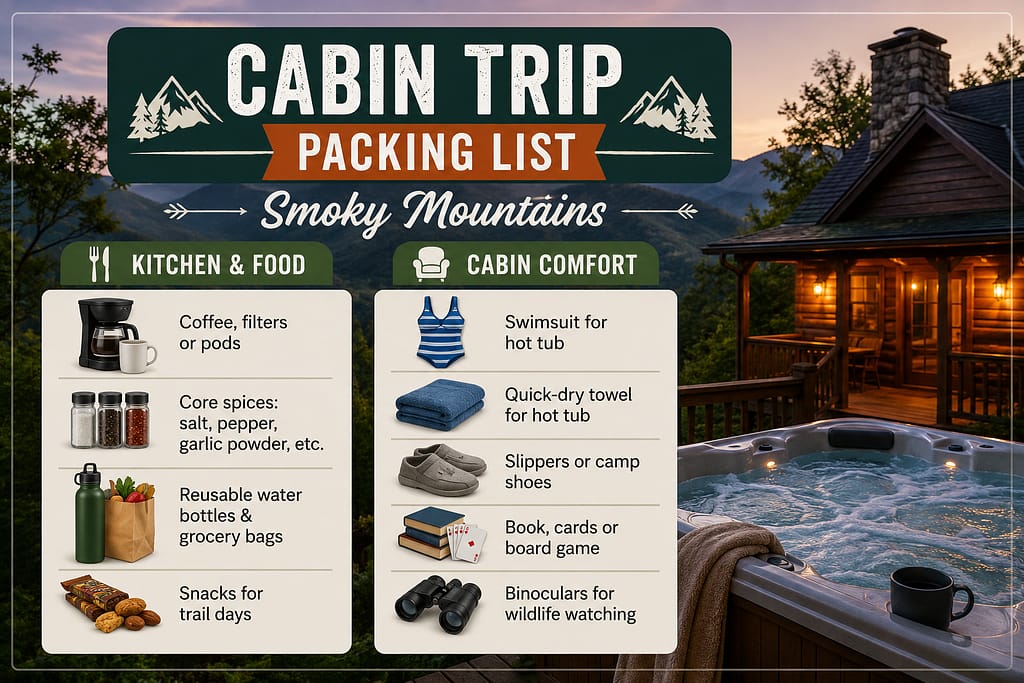
This is where a Smoky Mountain vacation packing list starts to differ meaningfully depending on where you’re staying. Some cabins hand you a fully stocked kitchen.
Others leave you buying pots and pans on arrival day.
Smoky Mountains Cabin’s Kitchen and Food
- Preferred coffee, filters, or pods, since machine types vary property to property
- A few core spices: salt, pepper, garlic powder, chili flakes
- Reusable water bottles and grocery bags
- Snacks for trail days, since not every cabin is near a 24-hour store
Smoky Mountains Cabin Comfort
- Swimsuit for hot tub use
- Quick-dry towel separate from bathroom towels
- Slippers or camp shoes for indoor lounging
- A book, cards, or a board game for slow evenings
- Binoculars, since wildlife sightings (deer, wild turkey, the occasional black bear at a distance) are common around dusk
What Visitors Often Don’t Realize: “Fully equipped kitchen” means different things at different properties. At Elk Hollow Resort, every stay includes a full kitchen, so guests can usually skip packing cookware and basic utensils entirely.
That’s not universal across Bryson City rentals, so it’s worth confirming directly with whichever property you book before you pack a suitcase full of pans you didn’t need.
Comparison: What Changes When Your Cabin Already Has the Essentials
| Item Category | Basic Cabin Rental | Fully Equipped Stay (like Elk Hollow) |
| Cookware and utensils | Often bring your own | Usually provided |
| Hot tub and fire pit | Sometimes shared or unavailable | Private at every stay, no shared facilities |
| Linens and towels | Varies by listing | Provided, though a separate quick-dry towel for hikes still helps |
| Starter toiletries | Rare | Common, but pack full-size items for stays over two nights |
| Climate control | Varies, older cabins may lack A/C or reliable heat | Present in all fifteen properties |
Confirming what’s actually included before you pack saves an entire duffel bag of unnecessary gear. It’s a five-minute question to the property, and it changes your whole packing list.
Smoky Mountains Packing List for Couples
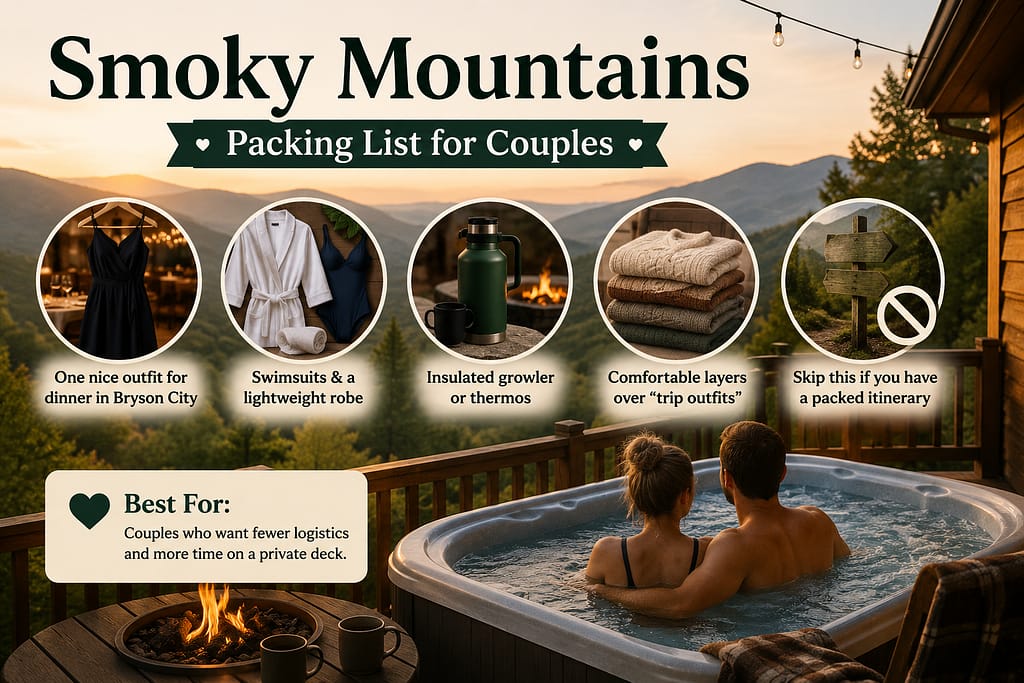
Couples make up a large share of our bookings, and their packing priorities look a little different from a family trip.
Best For: Couples who want fewer logistics and more time on a private deck. If that’s your trip, here’s what actually gets used.
- One nice outfit for a dinner in downtown Bryson City, since several restaurants lean a step above casual
- Swimsuits for the hot tub, obviously, but also a lightweight robe or wrap for the walk back inside
- An insulated growler or thermos for wine or coffee by the fire pit
- Comfortable layers over “trip outfits.” Nobody at a cabin is judging repeat sweaters
Skip This If: You’re packing for a packed, activity-heavy itinerary. Couples chasing four hikes and three attractions a day need the full hiking packing list above, not just the cozy version.
Family Vacation Packing List Smoky Mountains
Families ask us slightly different questions, usually centered on kids, tubing, and keeping everyone fed without three grocery runs.
- Water shoes and child-sized life vests for river tubing at Deep Creek
- Extra towels beyond what the cabin provides
- Printed or offline entertainment for long drives with patchy signal
- A basic first-aid kit stocked for scrapes, since kids and creek rocks go together
- Bug spray and after-bite gel, non-negotiable from late spring through early fall
Local Tip: Deep Creek’s tubing outfitters rent tubes on-site, so you don’t need to pack your own.
If you’re traveling with extended family or multiple households, reviewing options for the best cabins for group trips in the Smoky Mountains ensures everyone has enough space to spread out, while bringing water shoes with actual grip keeps everyone safe on the slick river rocks
Rain Gear for Smoky Mountains Hiking

The Smokies sit inside a temperate rainforest zone, and rain is a feature here, not an exception. Pack for it directly instead of hoping it holds off.
- Waterproof, breathable rain jacket, not just water-resistant
- Pack cover or dry bag for your daypack
- Quick-dry pants that don’t hold water weight
- A spare pair of dry socks stored in a zip bag
- Waterproof phone pouch for waterfall hikes especially
July is typically the wettest month around Bryson City, with afternoon thunderstorms that build fast and clear just as quickly.
Morning hikes generally beat afternoon ones for avoiding the worst of it.
Documents, Money, and Car Essentials for Smoky Mountains Trip
Easy to forget, expensive to be without.
- Photo ID and any booking confirmations, printed or screenshots
- National park parking tag if you plan to leave your vehicle anywhere longer than 15 minutes. Daily tags run $5, weekly $15, annual $40, purchasable online through recreation.gov or at park visitor centers
- Cash for roadside stands, small shops, and a few cash-only lots
- A printed map or downloaded offline directions, since cell service thins out near the forest ridge roads
- Basic car kit: jumper cables, flashlight, tire pressure gauge, and tire chains if you’re visiting in winter
Parking Reality Check: The park itself has no entrance fee, but a parking tag is required for any stop over 15 minutes, including trailheads and overlooks.
Vehicles without a displayed tag risk a citation. Buy yours online before you arrive so you’re not hunting for a kiosk on day one.
What NOT to Pack for the Smokies

Overpacking is more common than underpacking, in our experience.
- Formal or dressy outfits. Comfort is the norm almost everywhere in Bryson City
- A full set of cookware if your rental already provides a kitchen. Confirm first
- More than two jackets. One warm layer plus one waterproof shell covers nearly every scenario
- Strong perfume or cologne, since it draws insects
- Excess snacks. Bryson City has grocery stores and local markets within a short drive of most cabins
- A drone, if you’re planning to fly it inside park boundaries. It’s prohibited there
Elk Hollow Resort: The Ultimate Smoky Mountains Getaway

Tucked away in the scenic beauty of Bryson City, North Carolina, Elk Hollow Resort provides the ideal home base for your Great Smoky Mountains adventure.
Located just five minutes from Deep Creek’s famous waterfalls and river tubing put-in, this resort seamlessly blends rustic mountain charm with premium modern comfort.
| Essential Detail | Property Specification |
| Location | 74 Elk Hollow Road, Bryson City, NC 28713, United States (5 minutes from Deep Creek waterfalls/tubing & downtown) |
| Accommodation Types | 15 total stays (including Aztec & Foxfire tents, Hidden Falls Yurt, and the 4-bedroom Lookout Lodge) |
| Private Amenities | Private hot tub, fire pit, full kitchen, and climate control at every stay |
| Shared Facilities | None (100% private outdoor amenities for each stay) |
| Kitchen Essentials | Fully equipped kitchens with cookware and utensils provided |
| Nearby Attractions | Great Smoky Mountains National Park, Deep Creek Loop, Kuwohi, and downtown dining |
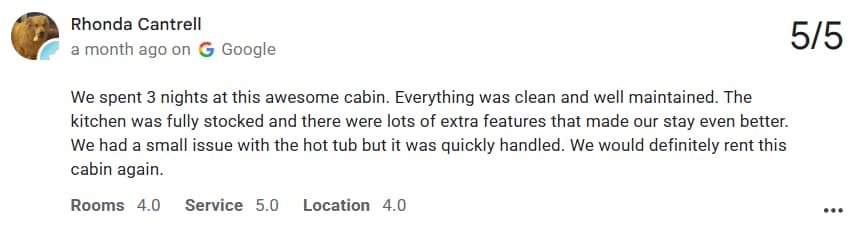
We have received a 4.9-star rating on Google, and guests consistently rave about the serene environment and thoughtfully designed accommodations, noting that the private hot tubs and fire pits make relaxing after a long day of hiking effortless.
Others highlight the unbeatable proximity to Deep Creek and the peace of mind that comes with staying in fully equipped, climate-controlled cabins.
Pack With Confidence for Your Smoky Mountains Trip
A Smoky Mountains packing list doesn’t need to be complicated. It needs to account for elevation swings, sudden rain, and a mountain range that genuinely runs three seasons in a single day.
Layers solve most of it. Good footwear solves the rest.
If you’re staying with us at Elk Hollow, several of the usual packing headaches disappear before you even arrive.
Every one of our fifteen stays, ranging from luxury yurts to full-sized Smoky Mountain vacation cabin rentals, comes with a private hot tub, a fire pit, a full kitchen, and climate control, so you can pack for the trail and let the cabin handle the rest.
We’re five minutes from Deep Creek’s waterfalls and tubing put-in, and a short drive from downtown Bryson City.
FAQs | Smoky Mountains Packing List
1. What is the best packing list for a Smoky Mountains vacation?
Layer for three seasons in one day: a moisture-wicking base, a warm mid-layer, and a waterproof shell. Add broken-in hiking shoes, sunscreen, and a reusable water bottle, and you’ve covered most of what actually gets used.
2. Do I need hiking boots for the Smoky Mountains?
Only if you’re doing trails longer than about a mile, or hiking in wet or cold conditions. For short walks around town or a cabin deck, well-worn sneakers or trail runners work fine.
3. What should I wear hiking in the Smoky Mountains in summer?
Breathable, moisture-wicking layers, a hat, and a rain shell for afternoon storms. Add water shoes if your route includes any creek crossings.
4. Is a rain jacket necessary for a Smoky Mountains trip?
Yes. The region sits in a temperate rainforest zone with rain likely in any season, and afternoon summer thunderstorms are routine rather than rare.
5. What’s different about packing for a Smoky Mountains cabin versus a hotel?
Cabin stays reward packing for the kitchen and outdoor space, coffee preferences, hot tub swimwear, fire pit snacks, rather than just clothing. Confirm what’s already provided before you overpack cookware or linens.
6. What should couples pack for a romantic Smoky Mountains trip?
Fewer logistics, more comfort: swimsuits for the hot tub, one nicer outfit for dinner in Bryson City, and layered loungewear for porch evenings. Skip the full hiking kit unless your trip is activity-heavy.
7. What do families need to pack for Smoky Mountains tubing and hiking?
Water shoes with real grip, child life vests for river tubing, sun protection, and a basic first-aid kit. Tubes themselves can be rented on-site at Deep Creek Outfitters.
8. Do I need a parking pass for Great Smoky Mountains National Park?
There’s no entrance fee, but a parking tag is required for any vehicle parked over 15 minutes. Daily tags are $5, weekly $15, and annual passes $40, available online or at visitor centers.
9. What should I pack for a fall foliage trip to the Smokies?
Warm mid-layers for cold mornings, a light jacket for warmer afternoons, and wool socks. Peak color typically runs mid-October through early November, though timing shifts year to year.
10. What are the most commonly forgotten items on a Smoky Mountains packing list?
Chargers, prescription medication, cash for small vendors, and printed reservation confirmations top our list. Cell service is unreliable enough in this region that a screenshot isn’t always a safe backup.
Sources Consulted:
- Official Great Smoky Mountains National Park website (nps.gov/grsm)
- Local tourism and visitor bureau resources for Bryson City and Swain County
- Google Reviews
- Tripadvisor
- Expedia
- Yelp
- Our team’s direct operational experience managing stays in this area