


Written by Jeanetta Shepherd, Owner of Elk Hollow Resort | Mountain Resort, Bryson City, NC | Updated July 2026
This guide is based on my experience as the owner of Elk Hollow Resort in Bryson City. Over the years, we’ve welcomed countless guests seeking mountain getaways and have often shared recommendations for other exceptional places to stay nearby. The information in this guide combines our local knowledge with thorough research into each property’s latest amenities, pricing, and guest reviews.
Disclosure: Elk Hollow Resort is our own property, which is why it’s featured first in this guide. It’s the accommodation we know best through years of welcoming guests and sharing the local area. We also encourage you to compare it with the other stays included here to find the option that best suits your trip. Rates reflect the latest information available as of July 2026 but may vary depending on season, availability, and demand. Estimated drive times are intended for general planning and are based on typical traffic conditions. This guide is reviewed and updated regularly to keep the information accurate and current.
Are yurts warm in winter? Guests ask us this question almost every week once the leaves start turning, and the honest answer is yes, a well-built and properly heated yurt can be one of the coziest places to stay in the mountains.
We’ve hosted guests during ice storms, snow weekends, and long January stretches in the 20s, and the yurts stay comfortable the whole time.
The circular shape, tight canvas or hard wall skin, and a heat source all work together. A yurt is not automatically warm just because it looks rustic and charming.
Insulation, heating, and a little bit of preparation make the real difference between a chilly night and a genuinely comfortable one.
North Carolina’s Winter Climate: What Yurt Guests Should Expect

North Carolina is not one climate. The coast, the Piedmont, and the mountains around Bryson City each behave differently in winter, which matters if you’re comparing a yurt stay here to one somewhere flatter or closer to the ocean.
Bryson City sits in Swain County at roughly 1,736 feet, right against the Great Smoky Mountains National Park.
Winters here run noticeably colder and snowier than Charlotte or Raleigh, but milder than the higher ridgelines a few miles away.
Approximate Bryson City winter conditions:
| Month | Average High | Average Low | Typical Precipitation |
| December | 47°F | 32°F | Rain, occasional snow |
| January | 43-48°F | 26-27°F | Coldest month, some snow |
| February | 48-52°F | 27-29°F | Mixed rain and snow |
These numbers are approximate and pulled from long-term local averages. Actual conditions swing year to year, and a cold snap can drop overnight lows well below freezing for several days in a row.
Local Tip: Guests often picture “Smoky Mountains in winter” and assume it means deep, constant snow. In town and around Deep Creek, snow is more occasional than constant, usually a handful of inches a few times a season.
Higher elevations along the Blue Ridge Parkway and Newfound Gap see far more accumulation. Check current road conditions before a winter trip, since some park roads close seasonally.
Are Yurts Warm Enough in Winter? The Question We Get Asked Most
This is the number one thing we hear from guests booking a winter stay, and it’s a fair question if your only reference point is a canvas tent from a camping trip. Yurts are a different structure entirely.
We’ve found that yurts hold heat well for a few practical reasons:
- The round shape has no flat exterior walls catching wind head-on, so cold air moves around the structure instead of pushing straight through it.
- A tight lattice frame wrapped in insulated layers creates a sealed envelope, similar in principle to a well-built cabin.
- The domed roof lets heated air rise and circulate rather than pooling in corners the way it can in a square room.
- A central heat source warms the whole open floor plan quickly, since there are no hallways or closed-off rooms to heat separately.
Many visitors underestimate how much difference a hard wall build makes over a soft-sided fabric yurt.
If you’re still weighing whether a yurt or a traditional wooden lodge is right for you, check out our guide to top-rated cabin rentals in NC to compare your options.
Are Yurts Well Insulated? Yurt Insulation for Winter, Layer by Layer

Insulation is the defensive side of yurt comfort. It’s what keeps the heat you generate from leaking back out into the cold.
A properly insulated yurt typically includes:
- Wall insulation: Reflective, multi-layer insulation (manufacturers often advertise R-7 to R-13) is standard in quality yurts, sometimes paired with wool or felt for a natural, breathable layer underneath.
- Roof insulation: Since heat rises, the dome and rafters need insulation at least as strong as the walls, if not stronger.
- Floor insulation: Rigid foam board between floor joists, combined with skirting around the platform’s perimeter, stops cold air from creeping up through the floor. This is one of the most overlooked areas in DIY yurt setups.
- Window and door seals: Insulated window covers and tight weatherstripping around doors close the small gaps that let heat escape fastest.
Insulation types compared:
| Insulation Type | Best For | Notes |
| Reflective multi-layer foil | Walls and roof | Lightweight, bounces radiant heat back inside |
| Wool or felt | Walls, breathability | Naturally moisture resistant, adds warmth without trapping damp air |
| Rigid foam board | Floors | Prevents cold rising from beneath the platform |
| Insulated window covers | Fabric windows | Easy to add or remove seasonally |
The floor is where a lot of heat loss happens if it’s ignored. A yurt can have excellent wall insulation and still feel cold underfoot if the platform beneath it is not sealed and insulated properly.
Are Yurts Heated? Yurt Heating Options Explained

Insulation alone will not make a yurt warm. It needs an active heat source, and this is where owners and glampers usually have the most questions.
How to heat a yurt, common options:
| Heat Source | How It Works | Good For |
| Wood stove | Vented through a wall flashing, burns firewood | Off-grid settings, ambiance, steady dry heat |
| Propane heater | Vented unit fed by tank or line | Backup or primary heat with quick warmup |
| Mini split heat pump | Ductless electric unit, heats and cools | Efficient, quiet, year-round comfort |
| Radiant floor heating | Heating elements or tubing beneath the floor | Even warmth, no cold spots, higher upfront cost |
| Electric space heater | Plug-in unit | Small yurts, supplemental heat only |
A mini split heat pump for a yurt has become one of the most popular choices for glamping operators because it handles both heating a yurt without electricity concerns being a factor (once wired) and summer cooling in the same unit. It’s efficient, quiet, and does not require anyone to manage a fire.
Wood stoves remain popular for their reliability and the atmosphere they add, but they require a proper chimney kit installation vented through the wall rather than the roof, both for easier chimney cleaning and to reduce the risk of ember damage to the yurt’s top cover.
Before You Book: If a listing advertises a “rustic” or “primitive” yurt for winter, always ask specifically what the heat source is and whether it runs on demand or needs to be manually fed, like a wood stove overnight.
Guests who assume every yurt has a thermostat sometimes end up surprised. Reading recent reviews on Google, Tripadvisor, or Expedia for the specific property, not just the general “yurt” category, is the fastest way to confirm.
How Elk Hollow Resort Heats Yurts in Bryson City NC

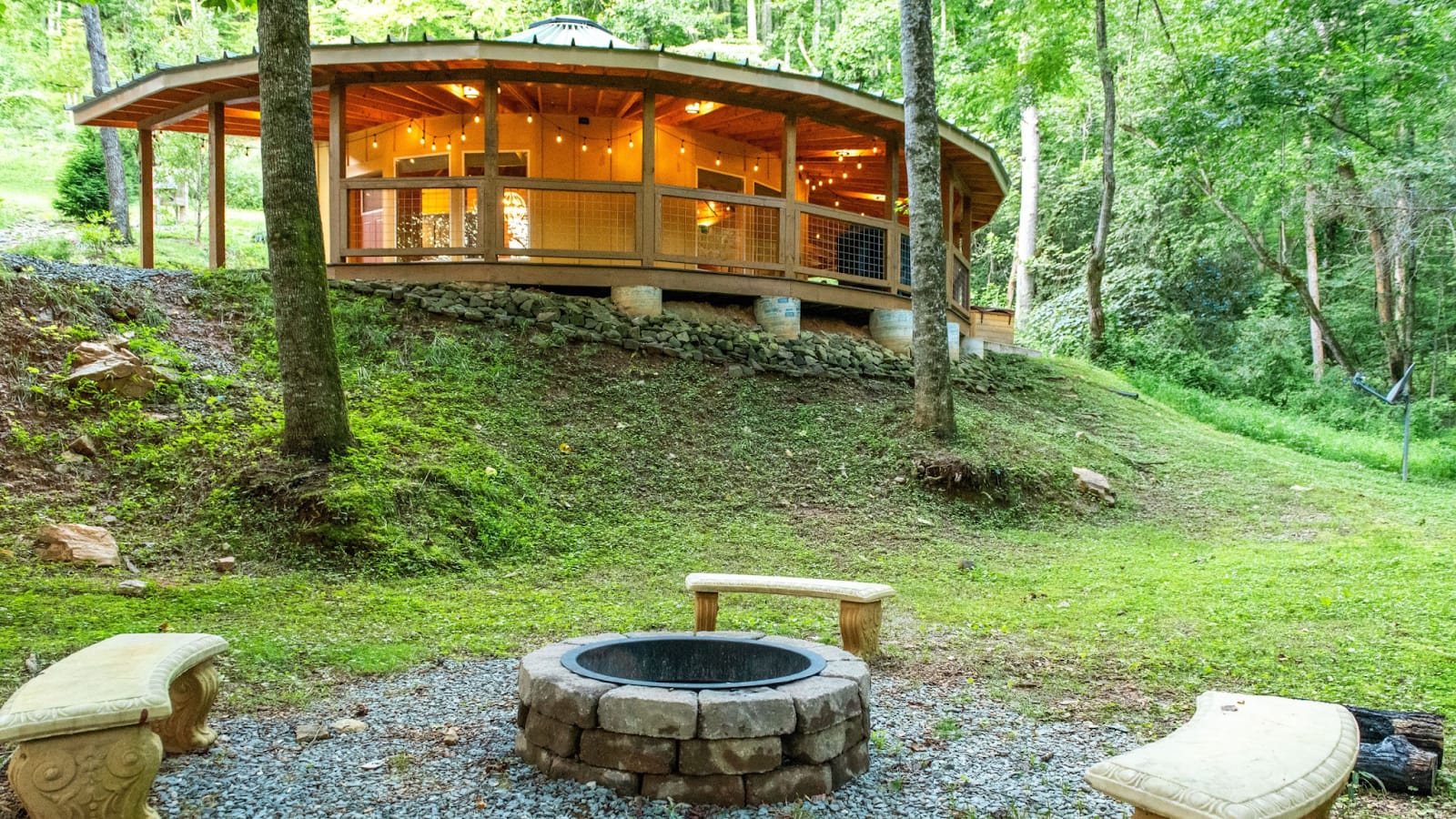
We built our yurts to handle real North Carolina winters, not just fall weekends. Each of our four hard wall yurts, Hidden Falls, Laughing Water, Spicewood, and Tumbling Brook, is a solid hard-wall build with a metal roof, not a soft canvas structure.
What that means for guests staying with us in the colder months:
- Central heating and air conditioning, so the space warms up on its own without guests managing a wood stove.
- A full kitchen, king bed, and private bath, giving the yurt the same functional layout as a small home rather than a bare canvas shell.
- A private hot tub and fire pit at every yurt, which our guests genuinely lean on more in winter, not less. Nothing quite matches the hot tub on a cold, clear night with steam rising over the mountains.
- Insulated hard walls designed to hold heat far better than a fabric tent, which is one reason we describe our yurts as year-round comfort rather than a seasonal add-on.
If you are planning a cozy retreat for two, take a look at our favorite choices for the best glamping for couples in Western North Carolina.
What We Tell Our Guests: When guests ask us if they’ll be cold in January, we tell them the truth: the yurts themselves stay warm because of the central heating, but it’s still the mountains, so pack layers for outside time around the fire pit or on the deck.
The hot tub tends to become the evening centerpiece for winter stays, and most guests tell us it’s their favorite part of a cold-weather visit.

We hold a 4.9 rating from more than 240 Google reviews, with guests frequently mentioning how comfortable the yurts feel regardless of season, alongside consistent praise on TripAdvisor for the fully stocked kitchens and private hot tubs.
Defeating the Winter Yurt’s Worst Enemy: Condensation and Mold Prevention

Ask anyone who has lived in a yurt through a cold season, and moisture management comes up almost immediately.
Warm, humid indoor air meeting a cold roof or wall creates condensation, and condensation left unchecked leads to mold.
Practical steps that make a real difference:
- Crack a roof vent or window briefly each day, even in the cold, to let stale, moist air escape.
- Use a small dehumidifier in enclosed or off-grid yurts, especially during rainy stretches.
- Wipe down window and dome condensation promptly rather than letting it soak into fabric or wood trim.
- Avoid drastic temperature swings. Cooling a yurt down gradually before leaving it unheated for several days protects both the structure and the insulation from stress.
- Keep firewood, damp gear, and wet boots away from interior walls where moisture can wick into insulation.
What Visitors Often Don’t Realize: A yurt that feels slightly damp on a rainy winter morning is not necessarily poorly built. Humidity swings are normal in any structure surrounded by forest and creek air.
The difference between a minor issue and a real mold problem usually comes down to ventilation habits, not the yurt’s construction quality.
Is a Yurt Warmer Than a Tent? Comparing Winter Stays at Elk Hollow
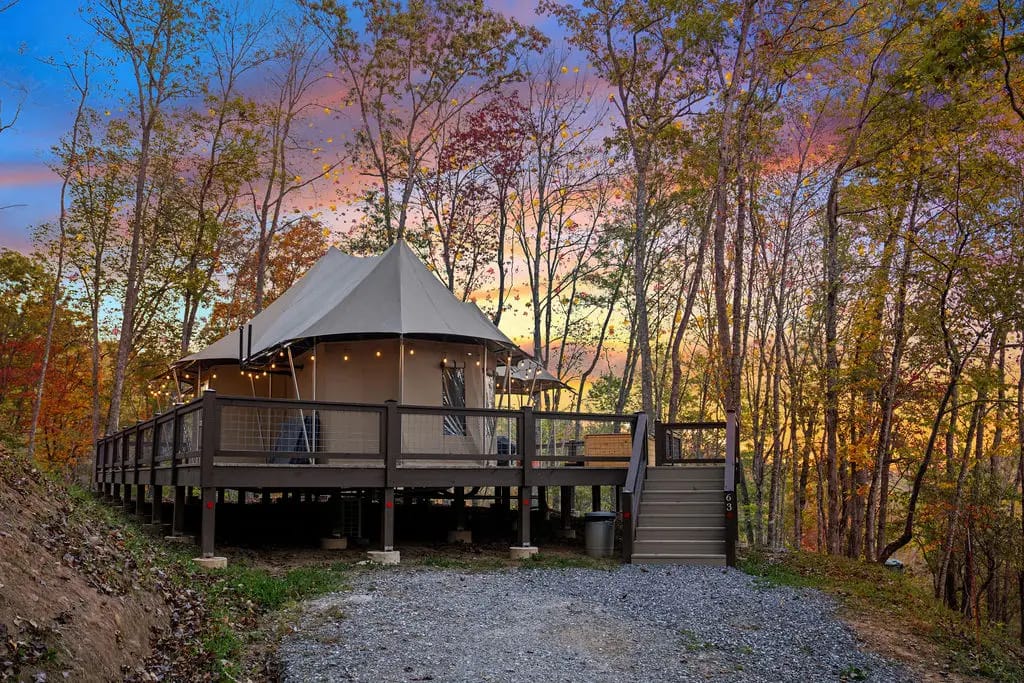
This is one of the most common comparisons guests bring up when booking, especially those choosing between our safari tents, yurts, and the Lookout Lodge for a colder trip.
Winter comfort comparison:
| Stay Type | Structure | Heating | Best Winter Use |
| Safari Tents | Fabric canopy over solid frame, climate-controlled | Central heating included | Cozy for two, strong choice in shoulder-season cold |
| Yurts | Hard wall build, metal roof | Central heating and air conditioning | Most structurally solid option for deep winter |
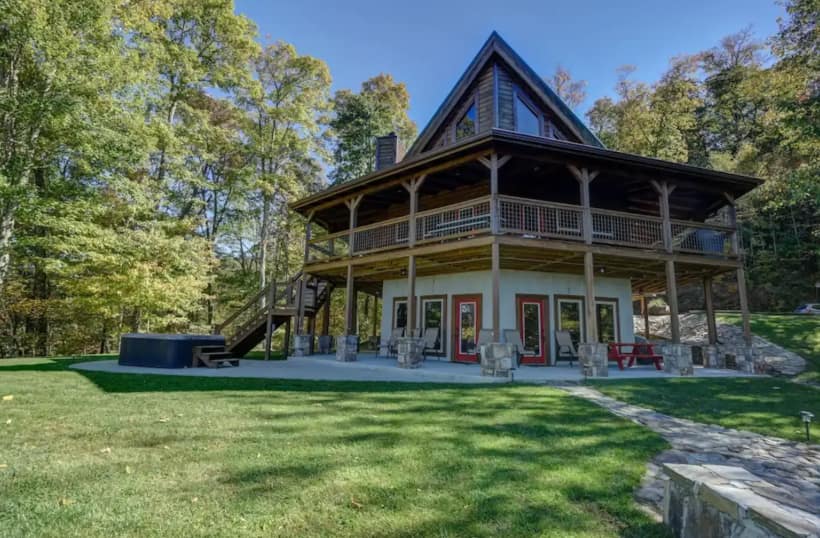
| Lookout Lodge | Four-bedroom mountain cabin | Full central heating | Groups and families wanting maximum space and separate rooms |
All fifteen stays at Elk Hollow include climate control and a private hot tub and fire pit, so no one is genuinely cold regardless of which style they choose.
The difference in winter is mostly about wall material and floor plan rather than temperature.
Choose a yurt if:
- You want a hard wall structure that feels closest to a small cabin
- You like the circular layout and the sound of rain or light snow on the metal roof
- You’re staying as a couple or small family and want a full kitchen and king bed in one open room
Choose a safari tent if:
- You want the most romantic, glamping-forward atmosphere
- You’re comfortable with a canvas exterior over a heated, insulated frame
- You want variety across ten distinct tent designs
Choose the Lookout Lodge if:
- You’re traveling with a larger group or multiple families
- You want four separate bedrooms and a game room for cold, indoor evenings
- You want the most space to spread out during a longer winter stay
For more inspiration on hosting larger gatherings or family reunions nearby, explore our full list of the best cabins for group trips in the Smoky Mountains.
Living in a Yurt in Winter: Off-Grid Heating and What It Costs

Some readers researching this topic are not planning a weekend stay but are looking into yurt camping in North Carolina or building their own for part-time or year-round living.
A few things are worth knowing before committing.
Approximate monthly heating cost ranges for a 24 to 30 foot yurt in a Western NC winter:
| Heat Source | Approximate Monthly Cost | Notes |
| Wood stove | $40 to $120 | Cost depends heavily on firewood price and how much you cut yourself |
| Propane heater | $80 to $200 | Higher during extended cold snaps |
| Mini split heat pump | $60 to $150 | Efficiency drops somewhat below freezing but stays reasonable |
| Electric space heater (supplemental) | $30 to $80 | Rarely enough as a sole heat source in real winter cold |
These figures are rough estimates and vary by yurt size, insulation quality, local utility rates, and how cold a given winter runs.
For off-grid heating a yurt without electricity, a wood stove paired with solar panels for lighting and small electronics is the most common setup.
Solar alone rarely supplies enough power for electric heat through a Western North Carolina winter, so most off-grid owners keep wood or propane as their primary heat source.
Booking a Winter Yurt Stay in Bryson City, NC

Winter is one of the quieter, more peaceful seasons to visit the Smokies, and it’s when our yurts tend to feel their coziest.
Deep Creek is a short five-minute drive from Elk Hollow Resort, and while summer tubing season is over, the trails stay open for quiet winter hikes, and the waterfalls are just as striking framed by bare trees and occasional frost.
Whether you’re looking for an off-grid experience or full resort amenities, explore our complete overview of yurt stays near Bryson City NC to find your perfect basecamp.
A few practical notes for anyone planning a cold-weather trip:
- Pack layers for outdoor time even though the yurts themselves stay warm inside.
- Check Great Smoky Mountains National Park road status before day trips to higher elevations, since some routes close seasonally.
- Book early for holiday weeks, since winter demand around the New Year and Presidents’ Day weekend has grown steadily among glamping travelers looking for a quieter alternative to summer crowds.
- Bring closed-toe shoes for the walk between the hot tub and the yurt on frosty nights.
Many guests staying at Elk Hollow Resort during the colder months tell us the hot tub and fire pit combination, paired with a warm, insulated yurt, ends up being the highlight of their whole trip rather than something they worried about beforehand.
Ready to Experience a Cozy Winter Yurt Stay?
Are yurts warm in winter? With the right insulation and an active heat source, yes, genuinely. The structure itself helps, thanks to the round shape and tight seams, but insulation and heating are what actually do the work.
A yurt without either of those is closer to a fabric tent than a cabin, while a properly built, centrally heated yurt like the ones at Elk Hollow Resort holds up through a real Western North Carolina winter.
If you’re weighing a winter trip to Bryson City, our hard wall yurts, insulated safari tents, and the four-bedroom Lookout Lodge all include central climate control, a private hot tub, and a fire pit, so the season outside does not need to limit the comfort inside.
We’re a short five-minute drive from Deep Creek and the Great Smoky Mountains National Park, and winter here tends to be quieter, slower, and just as beautiful as any other time of year.
If you have specific questions about heating, insulation, or which stay fits your winter trip best, our team is easy to reach at (678) 468-9182, and we’re happy to walk through the details before you book.
FAQs | Are Yurts Warm in Winter? Heating, Insulation & Comfort
1. How cold do yurts get in the winter?
Inside temperature depends entirely on insulation and heat source, not the outdoor low. A well-insulated, actively heated yurt like the ones at Elk Hollow Resort stays in a normal, comfortable indoor range regardless of how cold it gets outside. A poorly insulated or unheated yurt, on the other hand, can drop close to outdoor temperatures overnight. The structure itself does not guarantee warmth without a functioning heat source behind it.
2. Do yurts hold heat well compared to a regular house?
Yes, reasonably well, assuming similar insulation quality. The round shape and tight seams reduce some of the drafts a square structure with more corners tends to develop. A yurt has less thermal mass than a framed house, though, so it warms up quickly but also cools faster once the heat source is off for an extended period.
3. Is a yurt warmer than a tent for winter camping?
Considerably warmer, in most cases. A basic camping tent has little to no insulation and relies entirely on layered clothing and a sleeping bag rating. A yurt, especially a hard wall build, has structural insulation in the walls, roof, and often the floor, plus a dedicated heat source. Comparing a yurt to a typical camping tent is really comparing a small insulated cabin to a piece of temporary fabric shelter.
4. How much does it cost to heat a yurt through a full winter?
For a mid-size yurt in Western North Carolina, approximate monthly heating costs range from $40 for an efficient wood stove setup up to $200 for propane during a particularly cold stretch. A full winter season, roughly December through February, might run somewhere between $150 and $500 total depending on the heat source, yurt size, and how cold that particular year runs. These are estimates, and actual costs shift with fuel prices and insulation quality.
5. Can you live in a yurt year-round in North Carolina?
Yes, with the right setup. Many people live in yurts full time across Western North Carolina, but it requires attention to insulation, a reliable primary heat source, and often local permitting if the yurt is intended as a permanent residence rather than a recreational or seasonal structure. Zoning and building code requirements vary by county, so anyone considering full-time yurt living should confirm local rules before committing.
6. What’s the best wood stove size for a yurt?
It depends on square footage, but a small to mid-size stove rated for 800 to 1,200 square feet is typically oversized for a 24 to 30 foot yurt and can overheat the space quickly. Many yurt owners find a compact stove rated closer to 600 to 800 square feet performs better, since it’s easier to maintain a steady, comfortable temperature without constantly managing airflow to avoid overheating a smaller open floor plan.
7. Is a mini split heat pump a good option for a yurt?
For many owners and glamping operators, yes. A mini split provides efficient, on-demand heating in winter and doubles as air conditioning in summer, all from one compact unit that needs no fuel storage or daily maintenance. The main requirement is reliable electrical access, which makes it a strong choice for yurts with grid power and a less practical option off-grid.
8. How do you stop condensation and mold in a winter yurt?
Daily ventilation is the single most effective habit, even a few minutes of cracking a vent or window. Beyond that, using a small dehumidifier, wiping down visible moisture promptly, and avoiding dramatic temperature swings between heated and unheated periods all reduce the conditions mold needs to develop. Keeping wet gear away from interior walls also helps prevent moisture from being absorbed into insulation over time.
9. Are yurts insulated well enough for real winter weather, or just marketed that way?
It genuinely depends on the specific yurt. A quality hard wall or well-upgraded fabric yurt with reflective insulation, sealed seams, and floor insulation performs close to a small insulated cabin. A budget or bare-bones yurt without those upgrades may struggle in a hard freeze. When booking a yurt stay, it’s worth asking directly what insulation and heating are included rather than assuming every yurt performs the same.
10. Do Elk Hollow Resort’s yurts stay warm in the winter?
Yes. Our four yurts, Hidden Falls, Laughing Water, Spicewood, and Tumbling Brook, are hard wall builds with metal roofs and central heating and air conditioning, so they perform closer to a small heated cabin than a canvas tent. Guests staying with us in the colder months consistently mention the yurts feeling warm and comfortable, with the private hot tub becoming a favorite evening routine rather than something skipped because of the temperature.
Sources Consulted:
- Official yurt manufacturer resources on insulation and winter heating practices
- Yurt winterization checklists from working yurt builders and suppliers
- Google Maps and Google Reviews for Elk Hollow Resort and comparable regional stays
- Tripadvisor guest reviews for Elk Hollow Resort
- Historical climate data for Bryson City, NC and Swain County
- North Carolina building code and zoning discussions regarding temporary and permanent yurt structures
- Quora discussions from yurt owners and glampers on winter heating and condensation
- Our team’s operational experience hosting guests at Elk Hollow Resort through multiple winter seasons


