

Written by Jeanetta Shepherd, Owner of Elk Hollow Resort | Mountain Resort, Bryson City, NC | Updated July 2026
This guide is based on my experience as the owner of Elk Hollow Resort in Bryson City. Over the years, we’ve welcomed countless guests seeking mountain getaways and have often shared recommendations for other exceptional places to stay nearby. The information in this guide combines my local knowledge with thorough research into each property’s latest amenities, pricing, and guest reviews.
Disclosure: Elk Hollow Resort is my own property, which is why it’s featured first in this guide. It’s the accommodation we know best through years of welcoming guests and sharing the local area. We also encourage you to compare it with the other stays included here to find the option that best suits your trip. Rates reflect the latest information available as of July 2026 but may vary depending on season, availability, and demand. Estimated drive times are intended for general planning and are based on typical traffic conditions. This guide is reviewed and updated regularly to keep the information accurate and current.
Glamping vs camping is a question we hear almost every week at the front desk, usually from a couple standing between a tent camping trip they did in college and a private safari tent they just saw on Instagram.
The honest answer is that the two experiences share a location and not much else. One asks you to bring your own shelter and figure out dinner over a propane burner.
The other hands you a made bed, a kitchen, and a hot tub, and asks you to just show up.
We run a fifteen-unit glamping resort outside Bryson City, North Carolina, and we also grew up camping the traditional way in these same mountains. Many guests ask us specifically about our Glamping in Safari Tents Bryson City offerings.
So when guests ask us to explain the real difference, not the marketing version, we tend to walk them through comfort, cost, effort, and what actually happens once the sun goes down.
What Is Glamping vs Camping, Really

Camping means you supply the shelter, the sleep system, and most of the labor. Glamping means someone else already did that work, and your job is to enjoy the results.
- Camping requires a tent, sleeping bags, pads, a cooler, and usually a car full of gear you assemble on-site
- Glamping provides a fully set-up structure (a canvas tent, yurt, or cabin) with a real bed, furniture, and often a private bathroom already in place
- The overlap is that both put you outdoors, near trails, water, and quiet, without the walls of a hotel
Guests often ask us if glamping is “just camping with extras.” It is closer to a small cabin that happens to have canvas or fabric walls. The bones are different, not just the pillows.
What We Tell Our Guests: People expect glamping to feel like “camping, but nicer.” What actually surprises them is that it feels almost nothing like camping at all.
There is no pitching a tent, no hauling water, and no sleeping bag zipper stuck at 2 a.m.
The only shared trait is the setting. Everything else, from the bed to the bathroom, operates more like a boutique hotel room than a campsite.
Comfort and Sleeping Arrangements: Glamping vs Camping
This is usually the first question guests ask, and it is also where the two experiences diverge the most.
| Feature | Tent Camping | Glamping |
| Sleep surface | Sleeping pad or air mattress on the ground | Real bed frame with mattress, often a king |
| Bedding | Sleeping bag, sometimes a liner | Sheets, duvet, pillows, hotel-style linens |
| Insulation | Depends entirely on your gear and the weather | Built-in walls, insulation, and often climate control |
| Noise and drafts | Wind, rain, and wildlife sounds come through directly | Canvas or hard walls buffer most outside sound |
| Privacy | Thin tent fabric, sound and shadows travel | Solid structure, private deck, real doors in most units |
Many visitors underestimate how much sleep quality changes the rest of a trip. A rough night on the ground affects the next day’s hike, the next day’s mood, and honestly, whether people want to come back.
We have had guests tell us their first night in a proper bed on a mountain trip in years is what convinced them to book the following fall again.
 A note from your host
Come stay with us at Elk Hollow
Hi, I'm Jeanetta. I built Elk Hollow as a private mountain escape minutes from Deep Creek and the Great Smoky Mountains. Luxury safari tents, hard-wall yurts, and a four-bedroom lodge, each with a private hot tub and fire pit. I'd love to host you.
Use code BLOG10 for 10% off your stay
See Our Stays
A note from your host
Come stay with us at Elk Hollow
Hi, I'm Jeanetta. I built Elk Hollow as a private mountain escape minutes from Deep Creek and the Great Smoky Mountains. Luxury safari tents, hard-wall yurts, and a four-bedroom lodge, each with a private hot tub and fire pit. I'd love to host you.
Use code BLOG10 for 10% off your stay
See Our Stays
Amenities and Facilities: Glamping Tent Comforts vs Basic Camping Gear

Camping amenities are whatever you pack. Glamping amenities are already installed.
Typical camping setup:
- A tent you pitch yourself
- A cooler with ice that needs replacing every day or two
- A camp stove or fire ring for cooking
- A headlamp or lantern for light
- A portable toilet or a walk to a shared bathhouse
Typical glamping tent or yurt setup:
- Private hot tub and fire pit already built into the deck
- Full kitchen with a stove, refrigerator, and cookware
- Climate control (heat and air conditioning)
- Private bathroom with a real shower
- WiFi, in most modern properties
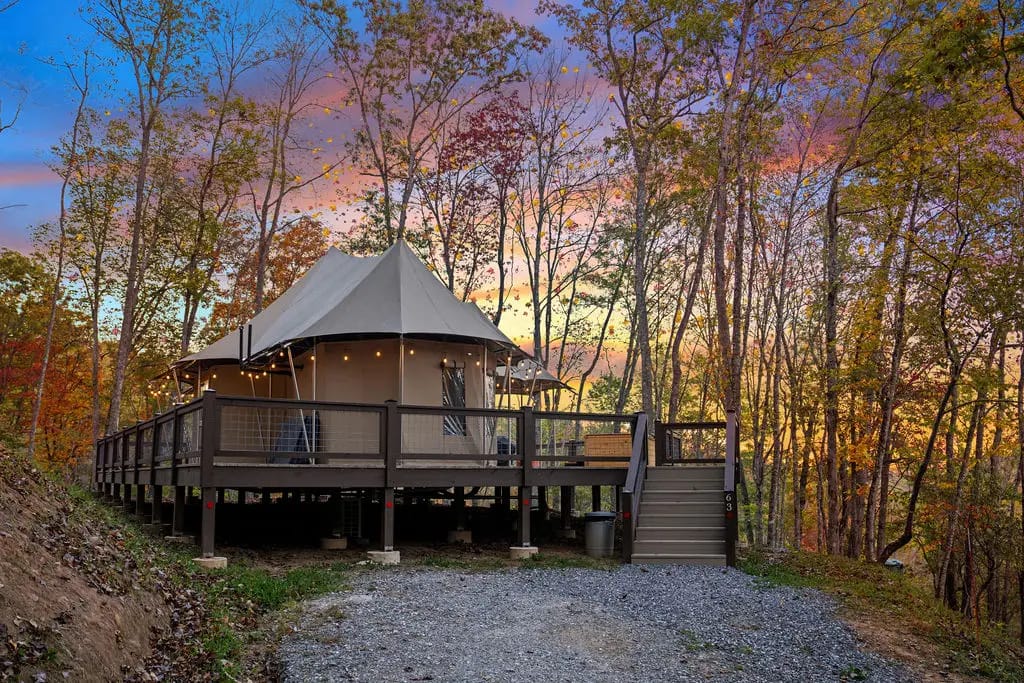
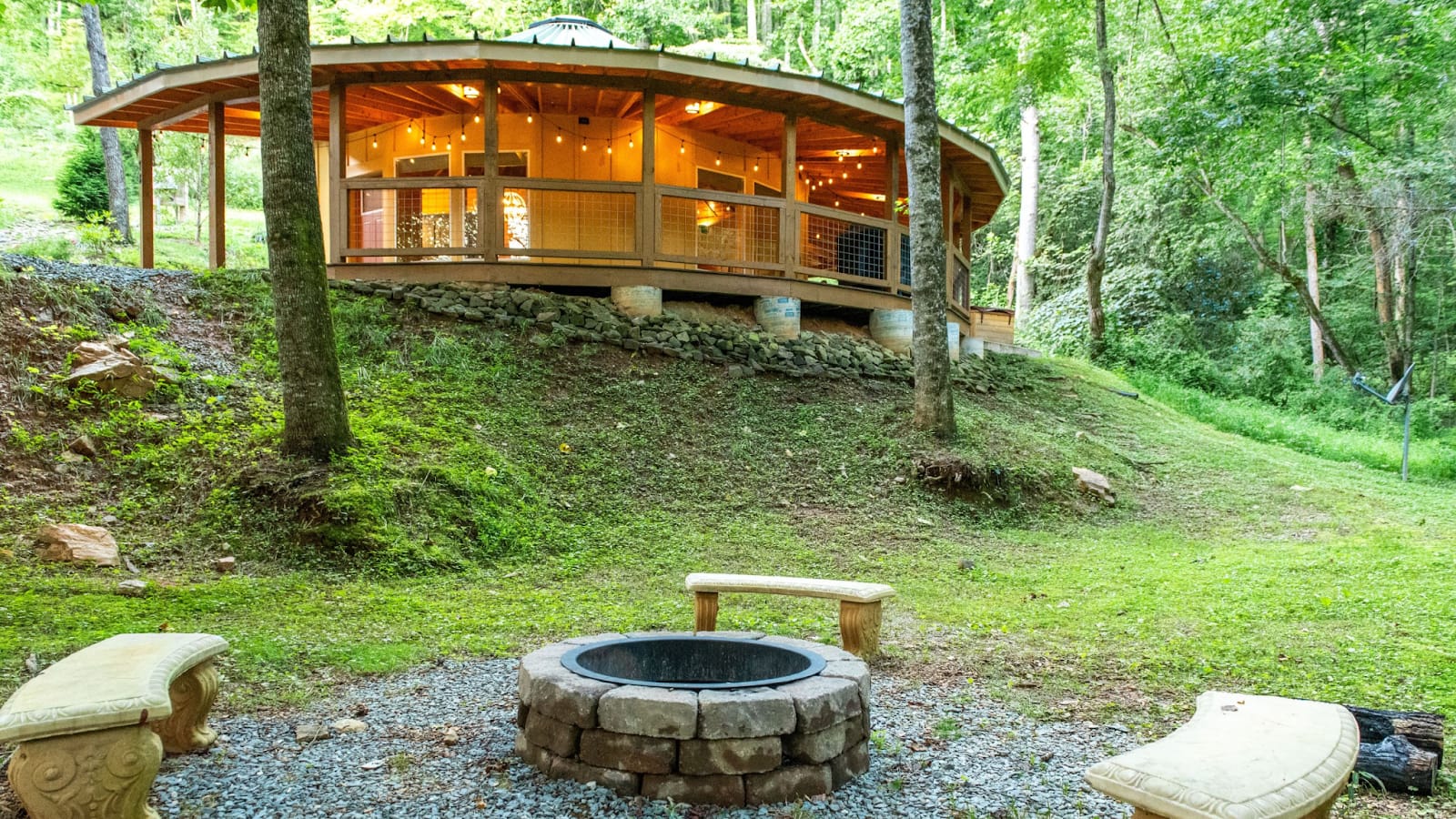
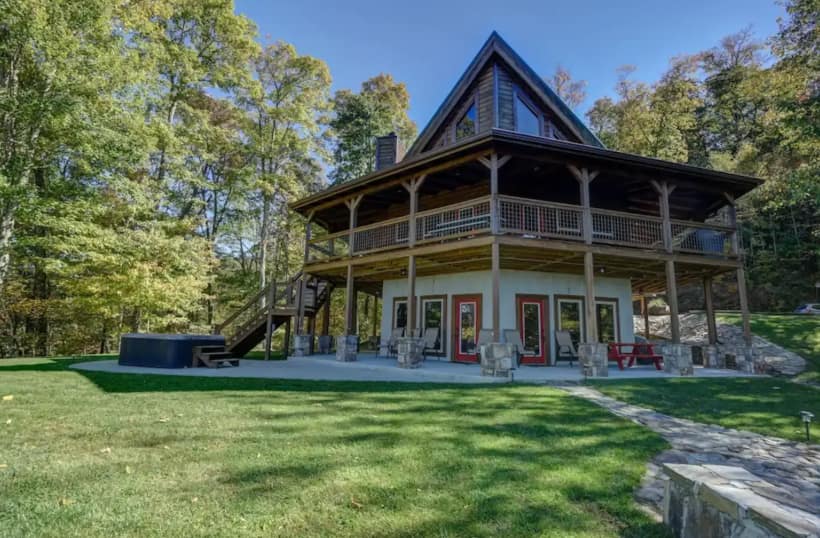
At Elk Hollow Resort, every one of our fifteen stays, whether it is a safari tent, a hard-wall yurt, or the Lookout Lodge, includes its own private hot tub and fire pit. No shared facilities, no waiting for a turn.
Guests staying with us often tell us that detail alone changes how the whole trip feels, since there is no scheduling around anyone else’s plans.
Food Prep and Dining: Glamping Kitchen vs Camp Stove Cooking

Cooking is one of the most physically different parts of glamping vs camping.
- Camping meals typically mean a two-burner propane stove, a cooler that is slowly losing its ice, and cleanup with a bucket of water you hauled from a spigot
- Glamping meals happen in a real kitchen, with a refrigerator, stovetop, and actual counter space, so dinner can be as simple or as involved as you want
We usually recommend that first-time glampers bring groceries for at least one home-cooked meal, since having a working kitchen is one of the parts people enjoy most and do not expect.
A full kitchen also means breakfast does not have to happen at a restaurant, which saves both time and money across a multi-night stay.
The Question We Get Asked Most: “Do we really have a full kitchen, or is it a mini fridge and a hot plate?”
Guests ask this constantly before booking. In our safari tents and yurts, it is a genuine kitchen with a stove, oven, or cooktop depending on the unit, refrigerator, and cookware, not a stripped-down version.
Most guests end up cooking at least one dinner in, especially after a day on the river when a restaurant reservation feels like too much effort.
Setup, Effort, and Gear Investment: Glamping Tent vs Tent Camping
This is where camping asks the most of you before the trip even starts.
| Step | Tent Camping | Glamping |
| Gear to buy or own | Tent, sleeping bags, pads, stove, cooler, lantern | None, it is already provided |
| Setup on arrival | 30 to 60 minutes pitching a tent, more in bad weather | None, walk in and unpack |
| Breakdown on departure | Packing wet gear, sweeping out dirt, loading the car | Simply check out |
| Upfront gear cost | Approximately $300 to $800 for a basic starter kit | $0, since the structure and furnishings are included in the rate |
The most common mistake we see with first-time campers is underestimating how long setup actually takes, especially in the dark or in rain.
Glamping removes that step entirely. You still get the fire pit and the stars, just without the 45 minutes of stakes and poles beforehand.
The Experience and Connection to Nature: Does Glamping Feel Less Authentic?

This is the question we get pushback on most often, usually from people who camped as kids and associate discomfort with “the real experience.”
Here is what we have actually observed after years of hosting both types of travelers:
- Sound and air are identical between glamping and camping. Canvas walls do not block birdsong, rain on the roof, or the smell of the forest
- Wildlife encounters happen just as often at a glamping property as at a campsite, since both sit in the same wooded terrain
- What differs is stress level. Campers spend mental energy managing gear, weather, and logistics. Glampers spend that same energy actually looking at the view
We usually tell guests that glamping does not remove nature; it removes the friction between you and it.
The stars over a private hot tub deck look exactly the same as the stars over a tent pad. The difference is whether you are comfortable enough to actually sit still and look up.
Choose Glamping If
- You want the scenery and quiet without owning or packing gear
- You are traveling with a partner or group that has mixed comfort levels
- You have limited vacation days and do not want to spend one of them setting up camp
- You want a private hot tub, real bathroom, and a bed that is not the ground
- If you are exploring broader options across the state, our guide to Glamping in North Carolina can help you find other great spots.
Choose Traditional Camping If
- You already own gear and enjoy the process of setup as part of the trip
- Budget is the top priority, and you can tolerate shared bathhouses
- You want maximum flexibility to camp in remote, dispersed areas with no reservations
- Minimalism and self-sufficiency are part of why you go outdoors in the first place
Cost Breakdown: Glamping vs Camping Bryson City NC Cost

Numbers help more than opinions here, so we pulled together what a typical night actually costs around Bryson City.
| Option | Approximate Price per Night | What’s Included |
| Dispersed camping (Nantahala National Forest) | Free | Nothing, fully primitive, no facilities |
| Deep Creek Campground (NPS, inside the park) | Approximately $30 plus a reservation fee of $3 to $9 | Tent pad, fire ring, picnic table, flush toilets, no showers |
| Deep Creek Tube Center & Campground (private) | Approximately $30 to $55 depending on site type | Creekside tent site, camp store access, tube rentals nearby |
| Budget glamping (shared-amenity yurts) | Approximately $120 to $220 | Real bed, basic furnishings, sometimes shared or select hot tubs |
| Elk Hollow Resort (safari tents, yurts, Lookout Lodge) | Approximately $151 to $262 | Private hot tub, fire pit, full kitchen, climate control, private bathroom |
Prices shift with the season and specific unit, so treat these as planning ranges rather than fixed numbers. A three-night camping trip might run $90 to $165 total for the site alone, before groceries and gear.
A three-night glamping stay at a property like ours runs roughly $450 to $786 for the same span, but includes the kitchen, hot tub, and bathroom that camping does not.
Before You Book: If your total trip budget matters more than anything else, traditional camping at Deep Creek or a dispersed forest site will always win on raw price.
But once you add gear costs, ice runs, and eating out because there is no kitchen, the gap between camping and budget glamping narrows more than most people expect.
Glamping vs Tent Camping Setup Time, Bathroom Access, and Weather Resilience
These three factors tend to matter more once people are actually mid-trip than they expected before booking.
| Factor | Tent Camping | Glamping |
| Setup time | 30 to 60+ minutes on arrival | Under 5 minutes, just unpacking bags |
| Bathroom access | Shared bathhouse, sometimes a short walk away, or none at all | Private, in-unit bathroom in most glamping properties |
| Rain response | Wet gear, potential leaks, muddy site | Solid structure stays dry, deck may need a quick wipe-down |
| Cold nights | Depends entirely on your sleeping bag rating | Built-in heat keeps units comfortable regardless of outside temps |
| Heat and humidity | No relief except shade and a fan you brought | Air conditioning in most modern glamping units |
We have found that bathroom access is the detail that changes people’s minds fastest. A 2 a.m. walk to a shared bathhouse in the rain is a fine story to tell later, but it is rarely fun in the moment.
Weather resilience follows a similar pattern. A hard rain that soaks a tent and everything in it is a minor inconvenience in a glamping unit with a solid roof and deck cover.
Packing List for Glamping vs Tent Camping

The gap here is dramatic enough that it changes how people plan the entire trip.
Camping packing list (partial):
- Tent, stakes, and a footprint
- Sleeping bags rated for the season
- Sleeping pads or an air mattress with a pump
- Camp stove, fuel, and cookware
- Cooler, ice, and several days of food
- Lantern, headlamps, and extra batteries
- First aid kit and bug spray
- Camp chairs and a table
Glamping packing list (partial):
- Clothes and light layers
- Toiletries
- Groceries if you plan to cook
- Swimsuit for the hot tub
- Hiking shoes for the trails nearby
One list fits in a duffel bag. The other typically fills a trunk. Many first-time glampers tell us they packed for camping out of habit, then realized on arrival they needed almost none of it.
For a more detailed breakdown of exactly what to bring for your next mountain adventure, see our complete Smoky Mountains Packing List.
Hidden Costs Breakdown: What “Free” Camping Doesn’t Include
Dispersed and low-cost camping looks free on paper, but the real cost shows up elsewhere.
| Hidden Cost | Approximate Amount |
| Starter gear (tent, bags, pads, stove) if you don’t already own it | $300 to $800 one-time |
| Ice and cooler restocking over a 3-night trip | $20 to $40 |
| Extra meals out because cooking over a fire is inconvenient | $60 to $150 |
| Gas for generator or extra fuel canisters | $15 to $30 |
| Gear replacement after wear, mildew, or storm damage | Varies, often $50 to $200 per season |
Glamping has its own version of hidden costs worth knowing about too, mainly resort fees at some properties, pet fees where applicable, and higher rates during peak fall foliage weekends.
We always recommend guests check what is included in the nightly rate before comparing two properties side by side, since “starting at” prices do not always include taxes or cleaning fees.
Elk Hollow Resort: Best Glamping in Bryson City NC

If you are comparing glamping vs camping and leaning toward glamping, this is where we can speak from direct experience, since it is our own property.
Elk Hollow Resort sits at 74 Elk Hollow Road in Bryson City, about five minutes from Deep Creek’s waterfalls and summer tubing, and roughly ten minutes from downtown Bryson City and the Great Smoky Mountains Railroad depot.
What every stay includes:
- A private hot tub and fire pit, with no shared facilities
- A full kitchen with stainless appliances
- A private bathroom with a real shower
- Climate control for year-round comfort
- A spacious deck and free on-site parking
Property styles to choose from:
- Ten safari tents, including Aztec, Canopy, Firefly, Foxfire, Huckleberry, Lost Creek, Safari, Serengeti, Shakonohey, and Swallowtail
- Four hard-wall yurts, including Hidden Falls, Laughing Water, Spicewood, and Tumbling Brook
- The four-bedroom Lookout Lodge, built for larger families or groups
Rates run approximately $151 to $262 per night, varying by the specific tent, yurt, or lodge you choose and the day of the week.

We hold a 4.9-star rating from more than 200 Google reviews, with guests frequently mentioning the privacy of each stay and how close it sits to Deep Creek without feeling crowded by other travelers.
Guests staying at Elk Hollow Resort often tell us the biggest surprise is how quiet it feels despite being minutes from major attractions. If you book directly, mention code BLOG10 for 10 percent off your stay.
If you need help planning the rest of your trip, check out our guide on Tourist Attractions in Bryson City for the best local spots to visit.
Worth the Extra Drive: Some travelers ask whether it is worth booking a glamping property outside the busiest tourist corridors of Gatlinburg or Pigeon Forge. In our experience, yes.
Bryson City sits closer to Deep Creek and the Nantahala Outdoor Center, with noticeably less traffic and fewer crowds, which means more of your trip is spent outdoors instead of in a parking line.
Glamping vs Camping Pros and Cons: Quick Decision Table
| Category | Camping Wins | Glamping Wins |
| Upfront cost | Yes, especially dispersed camping | No |
| Comfort and sleep quality | No | Yes |
| Flexibility to camp anywhere | Yes | No, tied to booked properties |
| Setup effort | No | Yes, no setup required |
| Accessibility for mobility limits | No | Yes |
| Self-sufficiency skill building | Yes | No |
| Weather resilience | No | Yes |
| Privacy and bathroom access | Depends on site | Yes, in most units |
| Best for large groups needing space | Sometimes | Yes, with lodge-style units |
Best For
Glamping tends to suit couples, families with young kids or older relatives, first-time outdoor travelers, and anyone with a short window of vacation time who wants maximum relaxation with minimum setup.
Not Ideal For
Traditional camping is a tougher fit for anyone managing mobility issues, temperature sensitivity, or a genuinely tight overnight budget where even $30 feels like too much for a single night’s stay.
The Verdict: Why Glamping Is the Smartest Way to Experience the Smokies
Glamping vs camping ultimately comes down to what you are optimizing for on a given trip. If the goal is testing your gear, sticking to a tight budget, or having full flexibility to camp anywhere, traditional camping still makes sense and always will.
If the goal is rest, real conversation, and time outdoors without managing a campsite, glamping tends to deliver more of what people actually came for.
We have hosted both kinds of travelers at Elk Hollow Resort, including plenty who used to camp and switched once they tried a private hot tub after a day at Deep Creek. There is no wrong answer here, only the version that matches your trip.
If you want to see what glamping actually includes before you book, our team is happy to walk you through the differences between our safari tents, yurts, and the Lookout Lodge, and help you figure out which fits your group.
FAQs | Glamping vs Camping: What’s Actually Different (2026)
1. Is glamping actually more relaxing than camping, or is that just marketing?
It genuinely is more relaxing for most people, mainly because the mental load disappears. Camping requires managing a stove, a cooler, weather, and setup, all while trying to also enjoy the trip. Glamping removes those tasks entirely, so the only thing left to manage is deciding what to do that day. Guests consistently tell us this is the difference they notice first, usually within the first hour of arrival.
2. What’s the actual difference between camping and glamping besides price?
Price is only part of it. The bigger differences are sleep quality, bathroom access, weather protection, and setup time. Camping asks you to bring and manage your own shelter and systems. Glamping provides a finished structure with a real bed, kitchen, and bathroom already in place, so the trip starts the moment you arrive instead of after 45 minutes of setup.
3. Can you go glamping if you’ve never camped before?
Yes, and it is often the easier entry point into the outdoors for people who never learned traditional camping skills. There is no tent to pitch, no fire-starting knowledge required, and no gear to buy in advance. Many first-time glampers tell us it feels closer to a boutique cabin stay than anything they associate with “roughing it.”
4. Is glamping worth it for just one or two nights?
For most travelers, yes, since the value shows up immediately in comfort and time saved on setup and breakdown. A one-night camping trip often spends a third of its time pitching and packing gear. A one-night glamping stay skips straight to relaxing, which matters more on a short trip than a longer one where setup time gets absorbed into the schedule.
5. How much more expensive is glamping than tent camping in Bryson City?
Budget tent camping near Bryson City runs roughly $30 to $55 per night, while glamping properties typically range from approximately $150 to $450 per night depending on amenities and season. The gap narrows once you factor in gear costs, ice, and eating out, but camping still wins on raw nightly price if that is the top priority.
6. Do glamping tents get too hot in summer without air conditioning?
Basic canvas tents without climate control can get uncomfortably warm, especially in humid Southeastern summers. Higher-end glamping properties, including ours, run split-unit air conditioning in every unit specifically to solve this problem. It’s worth confirming climate control is included before booking, since not every glamping listing has it.
7. Is glamping safe for kids and older family members?
Generally, yes, and often more so than traditional camping. Raised platforms, real bathrooms, and climate control remove several of the physical challenges that make camping harder for very young children or older relatives with mobility concerns. Many of our guests specifically book glamping stays for multi-generational family trips for this reason.
8. What should I actually pack for a glamping trip versus a camping trip?
For camping, expect to pack a tent, sleeping bags, pads, a stove, a cooler, and lighting. For glamping, you mostly need clothes, toiletries, a swimsuit for the hot tub, hiking shoes, and groceries if you plan to cook. The packing list difference alone is one of the most common surprises for first-time glampers.
9. Does glamping still feel like being outdoors, or does it feel like a hotel?
It feels like being outdoors with the inconvenience removed. The sounds, air, and views are identical to camping, since glamping structures sit in the same forested settings. What changes is your comfort level, not your proximity to nature. Most guests describe it as camping’s atmosphere with a hotel’s reliability.
10. Is dispersed or free camping near Bryson City actually a good option?
It can be, but only for experienced campers comfortable with zero facilities, no reservations, and full Leave No Trace responsibility. Nantahala National Forest allows dispersed camping in designated areas, but there are no bathrooms, no water, and no marked sites. It suits a specific type of traveler and is not a good starting point for beginners.
Sources Consulted:
- Official attraction and park websites, including the National Park Service (Great Smoky Mountains National Park) and Recreation.gov
- Official tourism resources for Bryson City and Western North Carolina
- Google Maps and Google Reviews for property locations, drive times, and guest ratings
- Tripadvisor listings and traveler reviews for area campgrounds and glamping properties
- Expedia and Airbnb listings for pricing comparisons
- Reddit discussions in outdoor and camping communities
- Quora discussions on glamping versus camping decision-making
- Local visitor resources and campground operator websites (Deep Creek Campground, Deep Creek Tube Center & Campground)
- Our team’s operational experience hosting guests at Elk Hollow Resort


