

Written by Jeanetta Shepherd, Owner of Elk Hollow Resort | Mountain Resort, Bryson City, NC | Updated July 2026
This guide is based on my experience as the owner of Elk Hollow Resort in Bryson City. Over the years, we’ve welcomed countless guests seeking mountain getaways and have often shared recommendations for other exceptional places to stay nearby. The information in this guide combines our local knowledge with thorough research into each property’s latest amenities, pricing, and guest reviews.
Disclosure: Elk Hollow Resort is our own property, which is why it’s featured first in this guide. It’s the accommodation we know best through years of welcoming guests and sharing the local area. We also encourage you to compare it with the other stays included here to find the option that best suits your trip. Rates reflect the latest information available as of July 2026 but may vary depending on season, availability, and demand. Estimated drive times are intended for general planning and are based on typical traffic conditions. This guide is reviewed and updated regularly to keep the information accurate and current.
What is a safari tent, really, is the question we hear most often from guests standing on their deck for the first time here in Bryson City, usually with a coffee in hand and a look of surprise that a “tent” has a king bed, a soaking tub, and central air. It’s a fair question.
The term gets thrown around loosely online, applied to everything from a canvas dome with a cot to a fully plumbed cabin with fabric walls.
We manage fifteen glamping stays in the Smoky Mountains, ten of them safari tents, and we spend a good part of every week explaining exactly what separates a real safari tent from a glorified camping tent. This guide is that explanation, room by room.
What Is a Safari Tent? A Straight Answer From People Who Build Them

A safari tent definition, in plain terms: a safari tent is a canvas structure with straight vertical walls, a peaked roof, and a rigid frame, built on a raised platform or solid floor, and finished with real furniture, plumbing, and climate control rather than sleeping bags and lanterns.
The style traces back to East African hunting expeditions, where guides needed shelter that was faster to move than a lodge but sturdier than a pup tent.
The four straight walls gave people room to stand, dress, and store gear, unlike the pyramid or bell-shaped camping tents most people picture. That headroom is still the defining feature of a safari-style tent today.
- Walls: heavy canvas, not nylon, stretched over a metal or timber frame
- Shape: rectangular footprint with vertical walls, not a cone or dome
- Base: a wood platform or poured foundation, never bare ground
- Roof: a peaked canvas roof, often with a secondary rain fly
What visitors get wrong most often is assuming “tent” means temporary or flimsy. A properly built canvas safari tent is anchored, insulated, and wired the same way a small cabin would be. The canvas is the finish, not the whole structure.
Before You Book: What “Safari Tent” Actually Promises. When a property lists a safari tent, it should mean a stationary, framed structure with real bedding, real plumbing, and real climate control, not a pop-up camping tent with a nice photo.
Ask any property directly whether the tent has a hard floor, insulated walls, and an attached or en-suite bathroom before booking.
The Anatomy of a Luxury Safari Tent

Every luxury safari tent, regardless of brand or continent, shares the same bones. Understanding them helps explain why these structures cost more to build than a typical camping tent and why they hold up through real weather.
| Component | What It’s Made Of | Why It Matters |
| Frame | Galvanized steel or hardwood posts | Holds shape in wind and snow load |
| Walls | Marine-grade canvas, often double-layered | Insulates and resists mildew |
| Flooring | Raised wood platform or concrete pad | Keeps interiors dry and level |
| Windows | Mesh screens with zip-down canvas or vinyl flaps | Airflow in summer, sealed in winter |
| Roof | Steep-pitched canvas over a ridge beam | Sheds rain and snow |
| Utilities | Wired electric, HVAC ductwork, plumbed water lines | Turns the tent into a four-season stay |
Frame and Foundation: What Sets a Luxury Canvas Tent Apart
The frame is the difference between a weekend novelty and a stay that survives a Smoky Mountain winter.
Budget canvas tents rely on lightweight aluminum poles that flex in wind. Luxury builds use engineered steel frames anchored into a permanent deck or foundation, closer to how a small structure is built than how a tent is pitched.
Canvas, Insulation, and Weatherproofing
Are safari tents waterproof? A properly built one is, though “waterproof” undersells it. Quality canvas is treated for water resistance and layered with an interior liner for insulation, so the tent sheds rain the way a home does and keeps the inside warm through a cold snap.
We’ll cover this in more depth further down, since it’s one of the most common questions we get before a booking.
Local Tip: Reading Canvas Quality Before You Book
Look at listing photos closely before booking any canvas safari tent. Taut, unwrinkled walls with visible double stitching at the seams usually mean a heavier grade canvas built for four-season use.
Loose, sagging fabric or single-stitched seams are signs of a lighter, warm-weather-only tent. It’s a five-second check that tells you a lot about how the stay will hold up if the weather turns.
Inside a Luxury Canvas Stay: A Room-by-Room Walkthrough

This is the part guests are usually most curious about. What does a safari tent look like inside? Here’s a walkthrough of a typical high-end layout, based on what we build and what we’ve seen across the category.
Safari Tent Bedroom Setup
The bedroom is almost always the anchor of the space. Expect a real bed frame, often a king, with hotel-grade linens rather than sleeping bags.
Many properties use heated mattress pads for cold mountain nights, plus blackout-capable canvas flaps or curtains for morning light control. Nightstands, reading lamps, and a rug underfoot are standard in a true luxury build.
Safari Tent With Bathroom: What’s Actually Inside
Not every safari tent includes a private bathroom, which is worth checking closely.
In a true luxury canvas stay, the bathroom is either built into the tent structure or attached as a connected en-suite, complete with a flush toilet, a real shower or soaking tub, a vanity, and running hot water.
Some higher-end builds include a freestanding tub positioned by a window for a half-outdoor feel.
Kitchen and Living Areas Inside a Luxury Tent
Full kitchens vary by property, but the higher end of the category includes a gas range, a full-size refrigerator, a sink, and enough counter space to actually cook a meal rather than microwave one.
A small living area with a sofa, a smart TV, and a dedicated workspace rounds out most higher-end layouts.
| Room | Typical Furnishings | What to Ask Before Booking |
| Bedroom | King bed, linens, blackout curtains, heated pad | Bed size, heating source |
| Bathroom | Toilet, shower or tub, vanity, hot water | Private or shared, tub or shower only |
| Kitchen | Range, fridge, sink, cookware | Full kitchen or kitchenette |
| Living area | Sofa, TV, desk | WiFi speed, workspace availability |
| Outdoor deck | Seating, grill, fire pit | Private or shared deck |
What Visitors Often Don’t Realize About Safari Tent Interiors: Guests frequently tell us they expected to feel like they were “roughing it” once inside, and are surprised the tent feels closer to a boutique hotel room than a campsite.
The canvas walls mean you’ll hear rain, birds, and the occasional creek, which most guests count as a feature rather than a drawback.
The one real trade-off is sound privacy between rooms inside a larger tent, since canvas doesn’t block noise the way drywall does.
Modern Comforts and Amenities: What to Expect From a Luxury Canvas Tent

The line between “camping” and “glamping” is almost entirely about utilities. Here’s what separates a modern luxury tented cabin from a traditional camping setup.
- Electricity: wired outlets, overhead lighting, and outlets for charging devices
- Climate control: ducted heat and air conditioning, or a mini-split system
- Running water: hot and cold water piped to the bathroom and kitchen
- WiFi: increasingly standard at glamping resorts, though signal varies by terrain
- Furnished interiors: real furniture rather than cots or camp chairs
- Private outdoor space: a deck, patio, or porch attached to the tent
Do Safari Tents Have Electricity?
Yes, in nearly every case at a true glamping resort. Wiring runs underground or along the platform into the tent, powering lights, outlets, climate control, and kitchen appliances.
The rare exception is a rustic seasonal camp built for a short-term event, which is closer to traditional camping than glamping and usually advertised that way.
Climate Control and Four-Season Comfort
Central heating and air conditioning inside a canvas structure surprises a lot of first-time glampers.
Ductwork gets run through the frame during construction, so the tent heats and cools the same way a small home would, which is what makes a canvas safari tent stay usable in January as well as July.
The Question We Get Asked Most: “Will I Be Cold?” This comes up on nearly every booking call in fall and winter.
The honest answer is no, not if the property runs proper heat and insulation, though you will feel more connected to outside temperature swings than in a cabin with solid walls.
We tell guests to expect a slightly cooler feel near the canvas walls themselves, even with the heat running, simply because fabric doesn’t hold heat the way wood or drywall does.
Bring warm socks for the walk from bed to bathroom on a January night, even with the heat on.
 A note from your host
Come stay with us at Elk Hollow
Hi, I'm Jeanetta. I built Elk Hollow as a private mountain escape minutes from Deep Creek and the Great Smoky Mountains. Luxury safari tents, hard-wall yurts, and a four-bedroom lodge, each with a private hot tub and fire pit. I'd love to host you.
Use code BLOG10 for 10% off your stay
See Our Stays
The Unique Appeal: Why Travelers Choose Safari Tents Over Cabins or Hotels

Safari tent stays fill a specific gap between traditional camping and a standard hotel room, and that gap is exactly why demand has grown so quickly across the glamping industry in recent years.
- Connection to nature without sacrifice: you hear the rain and the birds, but you still sleep in a real bed with heat and air
- Privacy: most safari tent stays sit apart from neighboring units, unlike a hotel corridor
- Novelty and photography: the canvas silhouette against mountains or a savanna makes for a memorable stay and a shareable photo
- A middle-ground price point: typically priced above a budget cabin rental but below a full luxury lodge suite
- Romantic framing: the format lends itself naturally to anniversaries, honeymoons, and proposals
Canvas stays are quickly becoming a favorite for travelers seeking unusual places to stay in North Carolina that combine high-end comfort with memorable outdoor settings.
How Big Is a Luxury Safari Tent?
Sizes vary widely by property and intended use. A tent built for two typically runs somewhere in the range of 300 to 500 square feet, including a bedroom, bathroom, and small living area.
Family-sized tents can run larger, sometimes 600 square feet or more, occasionally with a loft or second sleeping area.
Always check square footage in a listing rather than assuming based on exterior photos, since deck space often gets included in marketing photos in a way that makes the footprint look larger than the interior actually is.
Best Safari Tent Stays: What Separates a Good One From a Great One
- Private bathroom with real plumbing, not a shared bathhouse
- Heating and air conditioning, not just a space heater
- A private outdoor space, ideally with seating and a grill
- Recent, verified reviews mentioning cleanliness and responsiveness
- Clear photos of the actual interior, not just styled exterior shots
If you are traveling with a larger family or a bigger group that needs more room to spread out, take a look at our recommendations for the best cabins for group trips in the Smoky Mountains instead.
Elk Hollow Resort: Best Safari Tents in Bryson City NC

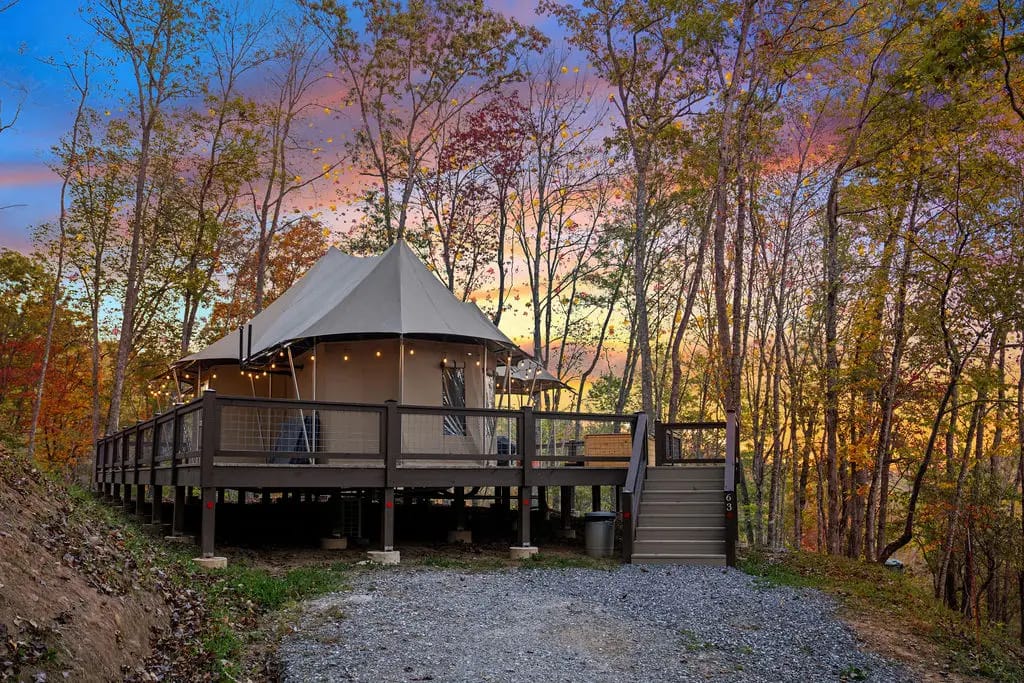
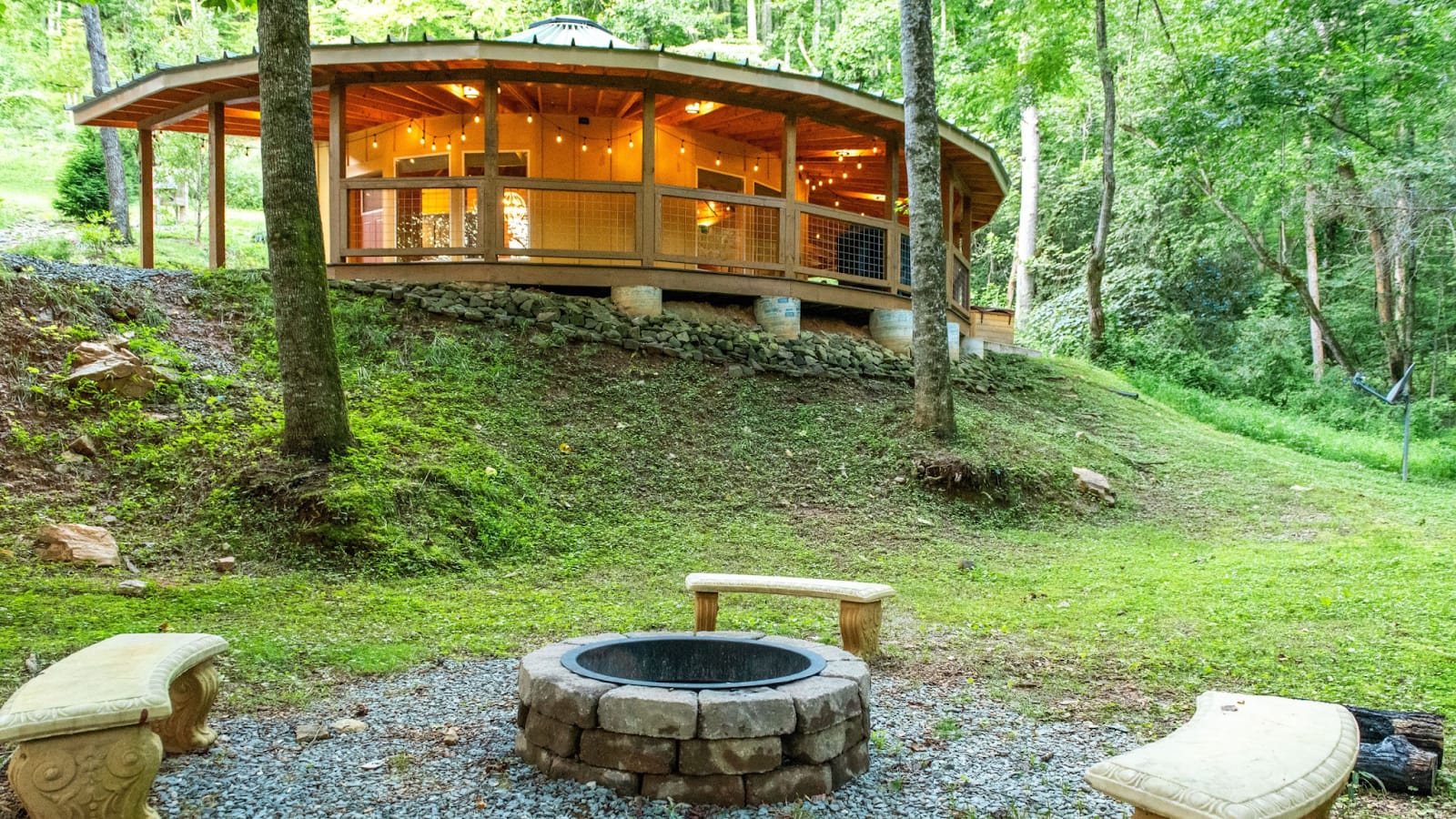
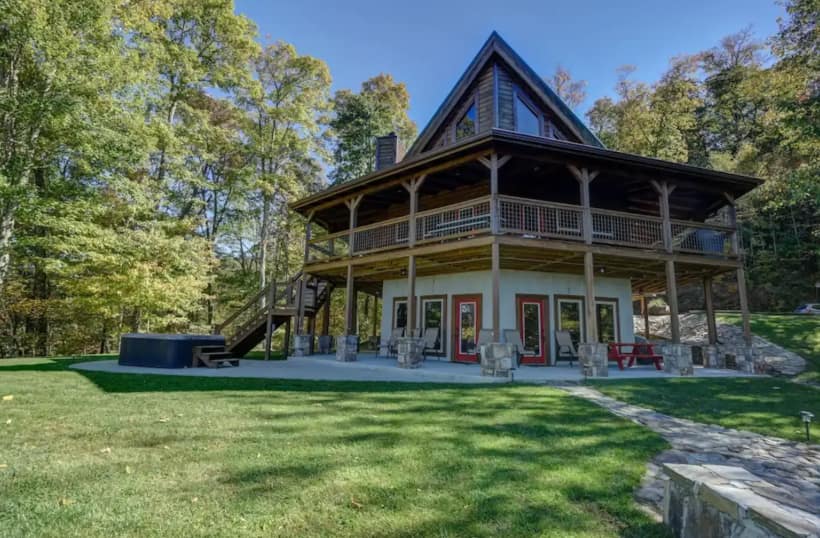
We’ll speak plainly here since this is our own property. Elk Hollow Resort sits on Elk Hollow Road just outside Bryson City, North Carolina, with ten safari tents, four hard-wall yurts, and a four-bedroom lodge spread across the mountainside.
- Address: 74 Elk Hollow Road, Bryson City, NC 28713
- Phone: +1 678-468-9182
Every stay, tent included, comes with its own private hot tub and fire pit. Nothing shared, nothing on a schedule.
Our safari tents run from approximately $151 to $262 per night depending on the specific tent and day of the week.
Each one has a king bed, a full kitchen, a private bathroom, a soaking tub, and a private deck with a hot tub and fire pit.
Themes vary by tent, from the jungle-inspired Lost Creek to the more classic canvas look of Safari and Serengeti, but the core build is consistent across all ten.
| Tent Name | Best For | Notable Feature |
| Aztec | Couples celebrating anniversaries | Private hot tub, mountain-facing deck |
| Canopy | First-time glampers | Well-kept, quiet forest setting |
| Firefly | Honeymooners | Wraparound porch, heated bed option |
| Foxfire | Couples wanting seclusion | Forest-facing private deck |
| Huckleberry | Return guests and longer stays | Roomy layout, stocked kitchen |
| Lost Creek | Total privacy seekers | End of a private road, creek below the deck |
| Safari | Classic canvas look | Traditional safari styling |
| Serengeti | Guests who want an immersive theme | Animal-themed interior touches |
| Shakonohey | Guests who cook their own meals | Full-size fridge, dishwasher, gas stove |
| Swallowtail | Quiet weekend getaways | Private setting away from the main road |
Whether you are celebrating an anniversary or planning a quiet mountain weekend together, explore our couples safari tents Bryson City options to find the perfect romantic setup.

Our safari tents hold a 4.9-star rating across more than 200 combined reviews on Google, with guests most often mentioning cleanliness, privacy, and how quickly our owner Jeanetta responds to questions before and during a stay.
Worth the Extra Drive? Choosing Elk Hollow Over Downtown Lodging

Guests sometimes ask whether it’s worth staying five minutes outside downtown Bryson City instead of directly in town.
For most travelers, yes. You trade a short drive for total privacy, your own hot tub, and quiet mountain nights, and you’re still close enough to walk into a downtown restaurant within minutes if you’d rather not cook.
If you specifically want to walk everywhere without a car, an in-town hotel may suit you better. If privacy and a private hot tub matter more than walkability, the short drive is worth it for most guests.
Choose a Safari Tent If
- You want the feel of camping without giving up a real bed, bathroom, and climate control
- You’re planning a romantic trip and want a private hot tub and fire pit
- You like the idea of falling asleep to rain and birdsong through canvas walls
- You’re comfortable with a short walk from parking to your deck, sometimes including stairs
Skip the Safari Tent If
- You need step-free access from parking to the front door
- You’re bringing a large group that needs more than two to four sleeping spots
- You want zero connection to outside sound, which canvas walls don’t fully block
- You’re traveling with a pet, since most safari tent stays, ours included, don’t allow pets
Safari Tent Checklist: What to Pack for a Luxury Canvas Stay

Packing for a safari tent stay is closer to packing for a nice cabin than packing for camping, with a few adjustments worth making.
- Layered clothing, since canvas walls mean you’ll feel outdoor temperature shifts more than in a hotel
- Closed-toe shoes for gravel paths, decks, and any stairs from parking
- A flashlight or headlamp for paths that may not be fully lit after dark
- Bug spray for spring and summer evenings on the deck
- A swimsuit for the private hot tub
- Basic groceries if the kitchen is stocked with essentials rather than full meals
- A portable phone charger, since some rural glamping areas have inconsistent cell signal
- Warm socks and a light jacket for chilly nights, even in warmer months
The Dark Sky Advantage: Stargazing From a Safari Tent

One of the most underrated parts of a safari tent stay is what happens after the sun goes down. Most glamping resorts, including ours, sit far enough from city lighting that the night sky opens up in a way most guests haven’t seen in years.
Canvas roofs with mesh skylight panels let you watch stars from bed on a clear night, and a deck with a fire pit turns into the best seat in the house once the temperature drops.
- Bryson City sits close enough to the Great Smoky Mountains National Park to benefit from genuinely dark rural skies
- Clear nights in fall and winter tend to offer the sharpest stargazing, since humidity and haze are lower
- A hot tub under an open sky is one of the most requested nighttime activities among our guests
- Bring a star chart app if you want to identify constellations rather than just admire the view
What We Tell Our Guests About Stargazing Season
The clearest skies here tend to run from late fall through winter, when humidity drops and the tree canopy thins out.
Summer nights are warmer and more comfortable for sitting outside, but haze and higher humidity can soften the view.
If stargazing is the main draw for your trip, we usually point guests toward a November or December stay, weather permitting, and remind them a clear mountain night gets cold fast even if the daytime temperature felt mild.
Localized Booking and Packing Realities: Bryson City, North Carolina

A few practical, local details matter more than most articles mention, and they come up constantly in our booking conversations.
Drive Times and Getting Here
Elk Hollow Resort sits approximately five minutes from downtown Bryson City and approximately five minutes from the Deep Creek entrance to the Great Smoky Mountains National Park.
The Nantahala Outdoor Center is roughly a 20 to 25 minute drive for whitewater rafting.
Asheville is approximately 1 to 1.5 hours by car, and Knoxville, Atlanta, and Charlotte are all reachable in a half-day drive, which makes this a realistic weekend destination for a wide radius of travelers.
If you are looking to map out your daily itinerary beyond the river and trails, check out our guide to the top tourist attractions in Bryson City.
Parking Reality Check
Most safari tent properties, ours included, offer free parking near each individual stay rather than a shared lot with a long walk.
That said, several of our tents, Lost Creek especially, sit at the end of gravel roads with a short flight of stairs from the parking spot up to the deck.
We always recommend arriving before dark on a first visit, since gravel roads and stairs are easier to navigate in daylight.
Seasonal Considerations for Bryson City
| Season | Weather Reality | Best For |
| Spring | Mild days, cool nights, occasional rain | Waterfall hikes, fewer crowds |
| Summer | Warm and humid, popular tubing season | Deep Creek tubing, family trips |
| Fall | Crisp air, peak leaf color, busiest season | Scenic drives, photography |
| Winter | Cold nights, occasional snow at elevation | Quiet stays, stargazing, hot tub evenings |
Summer Heat Considerations for a Canvas Stay
Summer in Bryson City runs warm and humid, and a canvas tent without proper air conditioning can get uncomfortable fast in July and August. Any property worth booking in summer should run real ducted AC, not just a window unit or fan.
We keep central air running in every tent through the warmer months for exactly this reason, and we’d steer any traveler away from a summer glamping stay that can’t confirm real air conditioning in writing before booking.
Prices for safari tent stays across the region generally run higher during fall leaf season and holiday weekends, and lower midweek in late winter.
Approximate nightly rates for a well-appointed safari tent in this part of North Carolina typically fall somewhere between $150 and $300, though exact pricing depends heavily on the specific property, season, and day of the week.
Your Next Unforgettable Safari Tent Stay Starts Here
A safari tent earns its price tag by doing something a hotel room and a camping tent both fail to do at once: put you close to the outdoors without asking you to give up a real bed, a hot shower, or a working thermostat.
The canvas walls are the whole appeal, not a compromise, once you understand what’s actually built into a proper luxury tent.
If you’re weighing a safari tent stay in the Smokies, we’d genuinely recommend comparing a few properties on square footage, bathroom setup, and climate control before booking anything sight unseen.
And if a private hot tub, a fire pit, and five minutes to Deep Creek sound like your kind of trip, our ten safari tents at Elk Hollow Resort are worth a look when you’re ready to book.
FAQs | What Is a Safari Tent? Inside a Luxury Canvas Stay
1. What is the difference between a safari tent and a regular camping tent?
A safari tent is a permanent or semi-permanent structure with a rigid frame, straight walls, and a solid floor, usually wired for electricity and plumbed for water. A regular camping tent is a portable, lightweight shelter you set up and take down yourself, with no built-in utilities. The safari tent trades portability for comfort and durability, which is the entire point of the design.
2. Are safari tents warm enough for winter camping trips?
A properly built luxury safari tent with ducted heat stays warm through winter, since the heating system works the same way it would in a small cabin. Budget or seasonal safari tents without insulation or a real HVAC system are a different story and are usually only rated for warmer months. Always confirm heating specifics with the property before booking a cold-weather stay.
3. Do safari tents have real bathrooms inside them?
Many do, especially at glamping resorts marketed as luxury stays, but not all. Some safari tents share a bathhouse instead of offering a private en-suite. If a private bathroom matters to your trip, check the listing closely or ask the property directly rather than assuming based on the word “luxury” alone.
4. How much does it cost to stay in a luxury safari tent?
Pricing varies widely by region and season, but a well-appointed safari tent with a private bathroom, hot tub, and kitchen typically runs somewhere between $150 and $300 per night in most parts of the United States. Rates climb during peak leaf season, holidays, and summer weekends, and drop midweek in the off-season.
5. What should I pack for a first-time safari tent stay?
Pack as you would for a nice cabin trip rather than a camping trip: layered clothing, closed-toe shoes for gravel paths, a flashlight for after-dark walks, and a swimsuit if a hot tub is included. Bring a light jacket even in summer, since canvas walls make you more aware of temperature swings than a fully insulated building would.
6. Are safari tents safe from bugs, wildlife, and bad weather?
Yes, when properly built. Quality canvas is treated and sealed, mesh screens keep insects out while allowing airflow, and a raised platform keeps the interior dry and off the ground. Bad weather is handled the same way it would be for any small structure, through solid anchoring and a steep roof pitch that sheds rain and snow.
7. Is a safari tent glamping experience good for a honeymoon or anniversary?
It’s one of the most requested formats for exactly that reason. The combination of privacy, a romantic canvas aesthetic, and amenities like a private hot tub and fire pit make safari tents a popular choice for couples, more so than a standard hotel room or a shared campground.
8. What’s the difference between a safari tent, a yurt, and a bell tent?
A safari tent has straight vertical walls and a rectangular footprint. A yurt is round with a lattice wall structure and a domed roof, often with a hard exterior shell for four-season use. A bell tent is cone-shaped with a single center pole and generally smaller and lighter than either a safari tent or a yurt. All three fall under the glamping umbrella, but they differ in shape, size, and typical amenities.
9. Can safari tents be used year-round, or only in warmer months?
Luxury safari tents built with insulation, ducted heat, and air conditioning are designed for year-round use. Lighter, seasonal safari tents without climate control are usually only comfortable in spring through fall. Always check whether a property specifically advertises four-season use before booking a winter or midsummer stay.
10. Do safari tent stays typically include WiFi and cell service?
Most established glamping resorts offer WiFi at each tent, though signal strength can vary based on terrain, especially in mountain regions. Cell service in rural glamping areas is sometimes limited, so it’s worth asking the property directly if staying connected matters for your trip, particularly if you’re planning to work remotely during your stay.
Sources Consulted:
- Official attraction and tourism websites for Bryson City, North Carolina and the Great Smoky Mountains National Park
- Google Maps for drive times, distances, and parking references
- Google Reviews and Tripadvisor guest feedback for glamping and safari tent stays
- Expedia listing data for comparative pricing context
- Quora discussions on glamping, safari tents, and canvas stay comfort
- Industry resources on safari camp construction and tented safari accommodation types
- Our team’s operational experience hosting guests across ten safari tents at Elk Hollow Resort


